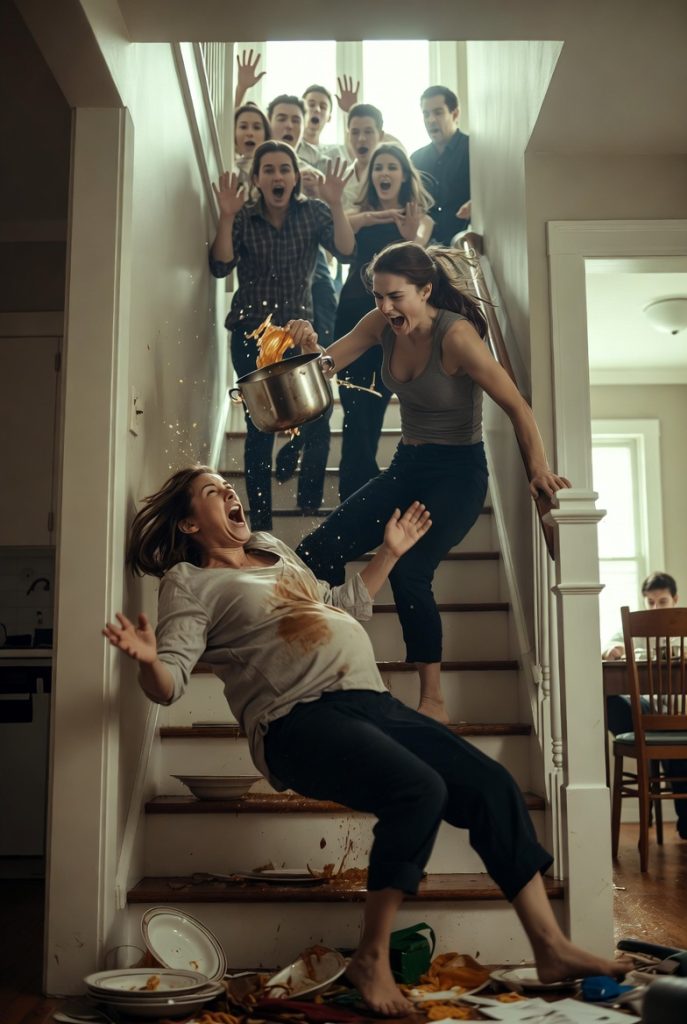
The hot liquid hit my face before I understood what was happening.
Not warm. Not uncomfortable. Scalding. The kind of heat that doesn’t register as pain at first—just shock, then a split second of nothing, then fire spreading across my scalp and down my neck like someone had lit my skin from the inside.
I heard myself scream, but the sound came from somewhere far away, disconnected from the body that was suddenly falling backward, my hands clawing at the air for something—anything—to hold onto.
Nobody caught me.
The woman in the red dress was still laughing. I saw her through the blur of gravy and tears, her wine glass raised like she was toasting someone across the room. Her blonde friend had her phone out now, angled toward me, because apparently this was the kind of memory worth preserving.
My shoulder hit the first stair.
My hips struck the second.
And then the third step—the one with the splintered edge that my father had been meaning to fix for fifteen years—slammed into my pregnant belly with a force that made my vision go white.
The room above me kept laughing.
“She’s so dramatic,” my mother said.
I couldn’t see her face. Couldn’t see anything except the ceiling spinning and the warmth spreading between my legs—too much warmth, too fast, soaking through my maternity jeans in a way that had nothing to do with gravy.
Finally, some entertainment, my sister added.
Alexis. Standing at the top of the stairs in her fitted black dress, her hair perfect, her makeup flawless. The gravy boat was still in her hand, steam rising from its spout like nothing had happened. Like she hadn’t just emptied the entire contents over her eight-months-pregnant sister’s head.
The baby wasn’t moving.
I pressed my palm flat against my belly—the way I’d done a hundred times a day for months, feeling Hannah roll and kick and hiccup inside me—and found nothing. Just stillness. Just a silence that made the laughter from above feel like something out of a nightmare.
“Look at all that blood,” someone said. Cheerfully. Like they were commenting on the weather.
The front door opened.
I felt the draft before I heard the footsteps—heavy, purposeful, the kind of stride that didn’t belong at a party full of Georgetown graduates in cocktail attire. Work boots appeared in my blurred line of vision. Scuffed. Dusty. Familiar.
“What,” my father’s voice said, “in God’s name is happening here?”
The laughter stopped.
Not faded. Stopped. Like someone had hit a switch.
I tried to say something—Dad, help, the baby, please—but my mouth wouldn’t form the words. My teeth were chattering, even though the gravy on my skin had started to cool into something tacky and disgusting. I was shivering. Bleeding. Lying in a puddle of my own amniotic fluid at the bottom of my mother’s staircase while thirty people watched from above.
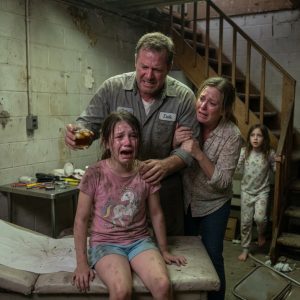
My father dropped to his knees beside me. His hands—rough, calloused, smelling like sawdust and coffee—moved to my face, wiping away the gravy so he could see me.
“Someone call an ambulance,” he said.
Nobody moved.
My mother appeared at the top of the stairs, her arms crossed over her chest. “Thomas, you’re overreacting. She just slipped. You know how clumsy she’s always been.”
Something in my father’s expression shifted. Went cold in a way I’d never seen before.
“Slipped,” he repeated.
“Alexis barely touched her.”
My father turned his head slowly toward my sister, who was still holding the gravy boat. Still wearing that perfect black dress. Still looking down at me like I’d ruined her evening by existing in her space.
“Is that true?” he asked her. “You barely touched her?”
Alexis opened her mouth. Closed it.
And somewhere behind her, someone’s phone kept recording.
What happened next—the paramedics, the surgery, the moment I woke up and couldn’t feel my daughter moving—no one in that room was ready for.
Continue in comments…
The house smelled like roasted turkey and cinnamon the moment I pushed open the front door, that familiar scent dragging me backward through years of childhood holidays whether I wanted it to or not. At eight months pregnant, every movement felt heavier than it had any right to be, as if gravity itself had decided to test me personally, and the October cold outside had finally pushed me to seek refuge in the only place that still felt familiar, even if it no longer felt safe.
My husband was overseas on military deployment, thousands of miles away and unreachable except through delayed messages that arrived hours late and always ended too soon. Most days, it was just me, swollen ankles, aching hips, and a quiet apartment where the silence pressed against my chest like an extra weight I couldn’t shrug off. Earlier that afternoon, I had texted my mom to ask if I could stop by, hoping for company, warmth, and maybe a little reassurance. She’d replied with a thumbs-up emoji, short and emotionless, but I took it as permission anyway.
The spare key was still tucked under the ceramic frog by the porch, just like it had been since I was twelve. Some things in that house never changed, even as everything else quietly shifted. My sister Alexis had moved back home six months earlier after her engagement imploded in spectacular fashion, and ever since then, my mother had been orbiting her moods like a nervous satellite. Alexis had always possessed an uncanny talent for turning her personal crises into family emergencies, and everyone else learned to adapt around her emotional weather.
Music thumped from somewhere deeper inside the house, loud enough that I felt it through the soles of my shoes. I shuffled forward slowly, one hand pressed into my lower back for support, the other gripping my purse as if it might anchor me. When I stepped into the living room, I froze, my brain lagging a second behind my eyes as it tried to process what I was seeing.
The room was full. Not family full, but party full. At least thirty people crowded the space, wine glasses in hand, laughter bouncing off the walls, streamers dangling from the ceiling like something out of a cheap event catalog. A glittering banner stretched across the fireplace read “Class of 2015 Reunion,” the letters catching the light as if they were mocking me for not knowing.
The conversations died instantly, like someone had cut the power.
Every face turned toward me at once, and I felt exposed in a way that made my skin prickle. A woman in a tight red dress was the first to react, her perfectly lined lips curling into something between amusement and disgust as her eyes swept over my body. Her friend, a blonde with long extensions that probably cost more than my monthly grocery budget, let out a sharp snort that turned into laughter she didn’t even try to hide.
“Oh my God,” the woman in red said loudly, lifting her wine glass and gesturing toward my stomach as if I were an exhibit. “Look at that thing. It’s like she swallowed a watermelon whole.”
The blonde covered her mouth, though her shoulders shook with laughter. “Does it move?” she asked, her eyes bright with curiosity that felt cruel. “Can we see it move?”
Heat rushed to my face, the kind that made my ears ring. I took a small step backward, my hip bumping into the doorframe, suddenly desperate to disappear. These were Alexis’s college friends, people she’d spent four years with at Georgetown, people who talked about networking and startups and destination weddings like those were universal experiences. People who had never worn maternity jeans or woken up choking on heartburn so intense it felt like swallowing fire.
Then I saw her.
Alexis stood near the fireplace in a fitted black cocktail dress that clung perfectly to her gym-toned body, every inch of her polished and composed. Her hair fell in glossy waves over her shoulders, not a strand out of place. She’d always been the beautiful one, the one my mother bragged about to her book club friends, the one strangers noticed when we walked into restaurants together. For half a second, surprise flickered across her face. Then it hardened into something far uglier.
“What are you doing here?” she snapped, her voice slicing through the room.
She strode toward me, heels clicking sharply against the hardwood, each step deliberate. “You useless woman with that huge stomach,” she continued loudly, making no attempt to lower her voice. “You ruined my party.”
I tried to speak, to explain that Mom had said it was fine, that I hadn’t known, that I would leave immediately, but my throat closed completely. My baby kicked hard against my ribs, a sudden, forceful movement that felt like she sensed my fear. My hand moved instinctively to my belly, fingers splayed protectively, a habit I’d developed without realizing it.
Alexis reached the dining table and grabbed something, her movements quick and sharp. Steam rose into the air as she lifted it, and my heart stuttered when I recognized it. The gravy boat. Mom’s antique gravy boat that had belonged to Grandma Ruth, the one nobody was ever allowed to touch without permission.
“Alexis, wait,” I managed to say, the words barely leaving my mouth.
She didn’t hesitate.
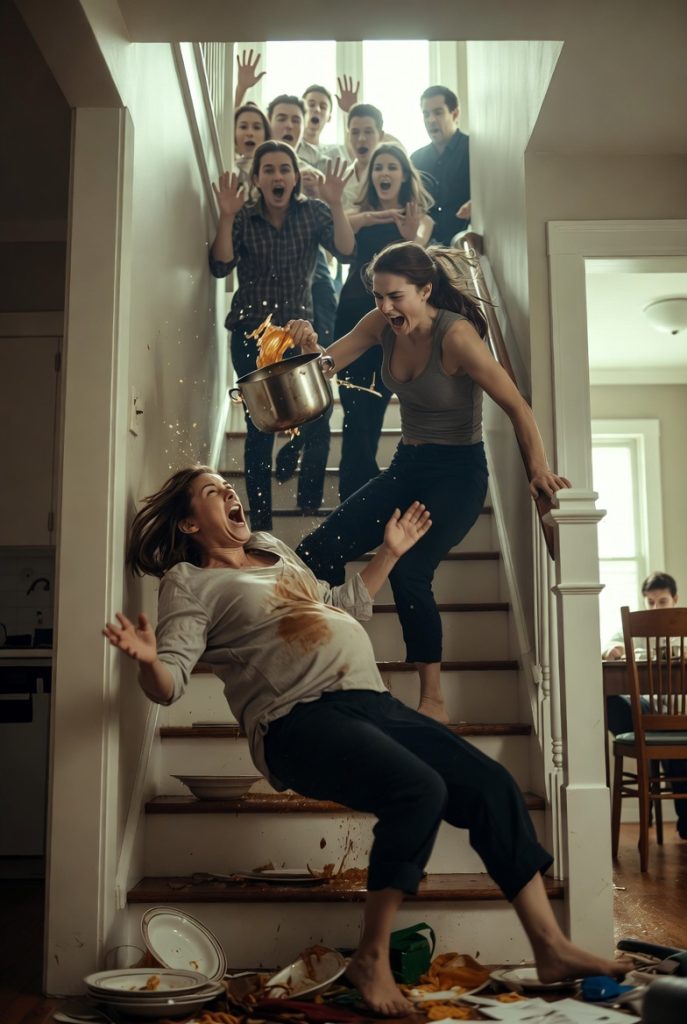
The hot liquid poured over my head in a sudden, scalding cascade. Pain exploded across my scalp and down my face, searing and immediate, stealing the air from my lungs. The gravy burned everywhere it touched, sliding into my eyes, down my neck, soaking into my clothes. I screamed, a sound I didn’t recognize as my own, stumbling backward as my hands flew up, desperate to protect my belly from whatever might come next.
My feet tangled, slick against the floor. The room spun violently. For a split second, everything tilted, and then I was falling.
My shoulder slammed into the first stair, pain shooting down my arm. My hips struck the second step hard enough to knock the breath from my chest. It was the third step that changed everything. The sharp wooden edge met my pregnant belly with brutal precision, a collision so wrong and so forceful that my mind refused to accept it at first.
Then something inside me shifted.
Gave way.
Warmth spread between my legs, soaking through my maternity jeans, uncontrollable and relentless. The fluid kept coming, pooling beneath me as I lay crumpled at the bottom of the stairs, my vision swimming with tears and gravy and shock. Mixed in with the warmth was something darker, heavier. Blood. So much blood that it stole the air from my lungs when I realized what it meant.
Laughter echoed from the living room above me, disjointed and cruel, as if nothing serious had happened at all. Someone clapped. The woman in red called out something about karma, her voice bright with amusement. My sister’s friends treated my agony like dinner theater, their laughter floating down the stairs in waves.
“She’s so dramatic,” my mother’s voice drifted from somewhere above me.
I couldn’t see her through the haze of pain, but I recognized that tone instantly. The same one she’d used when I cried as a kid about being excluded from Alexis’s birthday parties, when I begged her to intervene and she told me not to make a fuss.
“Finally, some entertainment,” Alexis added, her voice light, almost pleased.
Someone took a picture. The flash went off close enough that I saw white spots burst across my vision, but I couldn’t lift my head to see who held the phone. My body felt distant, unresponsive, as if it no longer belonged to me. I tried to move, to call out, but my voice came out as nothing more than a weak whisper.
The baby wasn’t moving.
My daughter, the little girl I’d already named Hannah after my grandmother, the one I talked to every night before bed, had gone completely still. Panic clawed at my chest harder than the burning pain radiating from my stomach. I tried to scream for help, but no sound came, only a thin, broken breath.
Then the front door opened.
Heavy footsteps crossed the threshold, purposeful and unfamiliar compared to the clicking heels and soft-soled dress shoes scattered throughout the house. A voice boomed through the entryway, deep and commanding, cutting through the laughter like a sudden crack of thunder.
“What in God’s name is happening here?” Dad’s voice demanded.
Continue in C0mment
(Please be patience with us as the full story is too long to be told here, but F.B. might hide the l.i.n.k to the full st0ry so we will have to update later. Thank you!)
The house smelled like roasted turkey and cinnamon when I pushed open the front door. At eight months pregnant, every movement felt like hauling sandbags, and the October chill had driven me to seek refuge at my childhood home.
My husband was overseas on a military deployment, leaving me alone in our apartment with swollen ankles and a growing sense of isolation that pressed against my chest like the weight of my unborn daughter. I had texted mom earlier asking if I could stop by. She’d responded with a thumbs up emoji, which I took as permission.
The spare key was still under the ceramic frog by the porch, just like it had been since I was 12. My sister Alexis had moved back home 6 months ago after her engagement fell apart, and mom had been walking on eggshells around her ever since. Alexis always had a talent for making her problems everyone else’s emergency.
Music thumped from somewhere deeper in the house. I shuffled through the entryway, one hand supporting my lower back, the other gripping my purse. The living room opened up before me and suddenly I was staring at 30-something people holding wine glasses and laughing. Streamers hung from the ceiling. A banner read class of 2015 reunion and glittering letters.
The conversation died like someone had cut the power. A woman in a tight red dress looked me up and down, her perfectly lined lips curling into something between amusement and disgust. Her friend, a blonde with extensions that probably cost more than my monthly grocery budget, let out a snort that turned into full-blown laughter.
Others joined in, their voices creating a chorus of mockery that made my skin crawl. “Oh my god,” Red Dress said, gesturing at my stomach with her wine glass. “Look at that thing. It’s like she swallowed a watermelon hole.” Blonde extensions covered her mouth, though her shoulders still shook. “Does it move? Can we see it move?” Heat flooded my face.
I took a step backward, my hip bumping into the door frame. These were Alexis’s college friends. People she’d spent four years with at Georgetown. People who probably never wore maternity pants or dealt with heartburn that felt like swallowing acid. Then I saw her. Alexa stood near the fireplace in a black cocktail dress that hugged her gym toned figure.
Her hair fell in perfect waves over her shoulders. She’d always been the beautiful one, the one who turned heads when we walked into restaurants together. The one mom bragged about to her book club friends. Her expression shifted from surprise to pure rage in less than a second. What are you doing here? Alexis’s voice cut through the laughter like a blade.
She stroed toward me, her heels clicking against the hardwood. You useless woman with that huge stomach. You ruined my party. I tried to speak, but my throat had closed up. The baby kicked hard against my ribs as if she could sense my distress. My hand moved instinctively to my belly, a protective gesture I developed over the past months.
Alexis reached the dining table and grabbed something. Steam rose from her hand. The gravy boat. Mom’s antique gravy boat that had belonged to Grandma Ruth. Alexis, wait. The words barely left my mouth before hot liquid cascaded over my head. Pain exploded across my scalp and down my face. The gravy burned everywhere it touched, seeping into my eyes and running down my neck.
I screamed, stumbling backward as my hands flew up to protect my belly. My feet tangled together. The world tilted sideways. Then I was falling. My shoulder hit the first stair. My hips struck the second, but it was the third step where everything went wrong. The sharp wooden edge caught my pregnant stomach with brutal precision.
Something inside me shifted, then gave way with a feeling I can only describe as tearing. Warmth spread between my legs, soaking through my maternity jeans. The fluid kept coming, mixing with something darker. Blood. So much blood. It pulled beneath me as I lay crumpled at the bottom of the stairs, my vision swimming with tears and gravy.
Laughter continued to echo from the living room. Someone clapped. Red dress called out something about karma being hilarious. My sister’s friends treated my agony like dinner theater. She’s so dramatic. Mom’s voice drifted from somewhere above me. I couldn’t see her through the haze of pain, but I’d recognize that tone anywhere.
The same one she used when I’d cried about being excluded from Alexis’s birthday parties as a kid. Finally, some entertainment, Alexis added. More laughter followed. Someone took a picture. The flash went off near my face, but I couldn’t lift my head to see who held the phone. The baby wasn’t moving. My daughter, the little girl I’d already named Hannah after my grandmother, had gone completely still.
Panic clawed at my chest worse than the burning pain radiating from my stomach. I tried to call for help, but only a whis came out. The front door opened. Footsteps cross the threshold, heavy and purposeful, different from the clicking heels and soft soul dress shoes scattered throughout the house. What in God’s name is happening here? Dad’s voice boomed through the entryway.
The laughter stopped instantly, like someone had pressed pause on a remote control. His work boots appeared in my blurred line of vision, scuffed and dusty from the construction site. He must have come straight from the job. Thomas, we’re having a party. Mom started, her tone shifting to something sweeter.
Your daughter just had a little accident. A little accident. Dad dropped to his knees beside me. His calloused hands moved to my face, gently wiping away the cooling gravy. His jaw clenched so tight I could see the muscle jumping beneath his stubble. She’s bleeding. There’s blood everywhere. Someone call an ambulance right now. Nobody moved.
The partygoers stood frozen like mannequins, their wine glasses suspended halfway to their mouths. Alexis had gone pale, her earlier bravado evaporating under Dad’s glare. I said, “Call an ambulance.” Dad’s roar made several people jump. Red dress fumbled for her phone, nearly dropping it in her haste.
Dad looked at mom, who stood on the stairs above us. Her expression carried more annoyance than concern, as if I’d spilled red wine on her carpet rather than potentially lost my baby on her staircase. Catherine, get down here and help your daughter. Thomas, you’re overreacting, Mom said. But she descended the stairs anyway. She probably just slipped.
You know how clumsy she’s always been. Clumsy? Dad’s voice went dangerously quiet. He stood up, his full height, making mom take a step back. Our daughter is lying in a pool of her own blood and amniotic fluid. Her water broke. That means the baby is coming, Catherine. That means she needs a hospital, not your dismissal.
I tried to speak to tell him about the gravy, about Alexis’s attack, but another wave of pain crashed through me. My abdomen contracted violently, forcing a scream from my throat. This wasn’t labor. This was my body trying to expel my daughter weeks too early because of trauma. You did this. Dad turned to Alexis. His finger pointed at her like a weapon.
You poured that gravy on her. I can smell it. I can see it in her hair. Alexis opened her mouth, then closed it again. Her friends had started edging toward the door, clearly hoping to escape before things got worse. Blonde extensions actually made it outside before dad’s next words stopped everyone cold. Nobody leaves.
You’re all witnesses to assault. Assault on a pregnant woman. That’s a felony in this state. The color drained from Alexis’s face completely. Dad, I didn’t mean you didn’t mean to burn your sister with hot gravy. Dad’s laugh held no humor. You didn’t mean to cause her to fall downstairs while 8 months pregnant. What exactly do you mean, Alexis? Sirens wailed in the distance, growing louder.
Red dress stood by the window, her phone still clutched in her shaking hand. She looked like she regretted every life choice that led her to this moment. Dad knelt beside me again, his hand finding mine. Hannah’s going to be okay. You’re both going to be okay. I’ve got you now. I wanted to believe him.
But the blood kept spreading across the floor, and my daughter still wasn’t moving, and the pain in my stomach felt like someone had reached inside me and twisted everything the wrong way. The paramedics arrived in a blur of navy blue uniforms and urgent questions. They loaded me onto a stretcher while taking my vital signs.
One of them, a woman with kind eyes, kept talking to me about staying calm and breathing. She placed an oxygen mask over my face. Dad climbed into the ambulance behind me. Before the doors closed, I saw him point at Alexis through the window. You stay right there. The police are on their way, and you’re going to explain exactly what happened.
The last thing I heard before the ambulance pulled away was mom’s voice, shrill and defensive. She’s exaggerating. It was just an accident at a party. The emergency room smelled like antiseptic in fear. Doctors surrounded me, their hands pressing monitors against my belly while they searched for Hannah’s heartbeat. The machine made horrible static sounds.
Then, faint and fast, a rhythmic thumping filled the room. Baby’s heart rate is elevated, but present, someone announced. We need to get her to surgery now. Placental abruption. They wheeled me down bright corridors while explaining that my placenta had separated from my uterus during the fall. Hannah was in distress. They needed to perform an emergency C-section immediately.
I signed consent forms with trembling hands, barely able to read through my tears. Dad waited outside the operating room. The last thing I saw before they put me under was his face pressed against the window, his hand raised in what might have been a wave or a prayer. I woke up to pain and the sound of machines beeping. My stomach felt like someone had sliced it open and stitched it back together, which was exactly what had happened.
A nurse appeared beside my bed, her smile gentle but professional. “Your daughter is in the niku,” she said. “She’s breathing on her own.” 4 lb 6 o. The doctors say she’s a fighter. Relief hit me so hard I started sobbing. Hannah was alive, small and early and struggling, but alive.
The nurse handed me tissues and explained that I could see her once I was stable enough to be moved. Dad appeared in the doorway an hour later. He looked like he’d aged 10 years. His eyes were red rimmed, his shirt wrinkled. But when he saw me awake, his whole face transformed. She’s beautiful, he said, pulling a chair close to my bed.
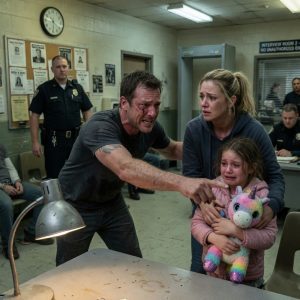
She has your nose. And she’s mad as heck about being evicted early. I laughed, then winced as the movement pulled at my incision. Where’s mom? Dad’s expression hardened. At the police station, along with your sister, he explained everything while I lay there processing. The police had arrived at the house shortly after the ambulance left.
Bate interviewed witnesses, all of whom confirmed that Alexis had deliberately poured hot gravy on me. Several people had phone footage of the incident. Red dress, apparently overcome with guilt, had provided the most detailed statement. They arrested Alexis on the spot, Dad continued. Assault and battery, reckless endangerment of a child.
The DA is talking about upgraded charges since you were pregnant and since the attack resulted in premature birth. What about mom? The question hurt more than my surgical wounds. Dad’s jaw tightened. She tried to convince the police it was an accident. Kept insisting you slipped, but too many witnesses contradicted her story.
They charged her with obstruction and filing a false police report. The hospital room felt too small. Suddenly, my mother and sister were in jail because of me. Because I’d walked into a party where I wasn’t wanted. Because I’d existed in a space that Alexis considered hers alone. This isn’t your fault. Dad’s hand covered mine. Don’t you dare start thinking that way.
Alexis made a choice. Your mother made a choice to defend her instead of protecting you. Those are their choices, not yours. Three days passed before I could finally hold Hannah. They wheeled me down to the niku in a wheelchair, my fourpole clattering beside us. She was so tiny in her incubator, covered in wires and tubes.
But when the nurse placed her in my arms for the first time, her eyes opened dark and searching. Hey, baby girl, I whispered, “I’m sorry you had to come out early, but you’re safe now.” Dad stood beside me, his hand on my shoulder. We stayed like that for an hour, just watching Hannah breathe. The nurses had to eventually take her back for feeding, but I’d gotten to hold my daughter. That was enough for now.
The legal situation unfolded over the following weeks. Alexis’s bail was set at $50,000. Mom scraped together the money by mortgaging the house, which dad discovered only after the fact. Their marriage, already strained, cracked wide open. Dad moved into a hotel. My husband, Jake, came home on emergency leave two weeks after Hannah’s birth.
The military had expedited his return after the Red Cross contacted his commanding officer. He walked into my hospital room looking exhausted and terrified. But when he saw Hannah in my arms, he broke down completely. I should have been here. He kept saying, “I should have protected you. You’re here now.” I told him, “That’s what matters.
” Jake stayed beside us through Hannah’s month-long niku stay. We took turns doing skin-to-skin contact, changing her tiny diapers, learning how to feed her through the nasogastric tube before she was strong enough to nurse. The nurses became our extended family, celebrating every ounce Hannah gained and every milestone she hit.
Alexexas tried to call me from jail. I didn’t answer. She sent letters that the hospital staff screamed before passing along. I threw them away without reading them. Mom called, too, leaving voicemails about how I was tearing the family apart. How Alexis’s life was being ruined over one mistake. One mistake. as if attempted murder was equivalent to forgetting someone’s birthday.
Dad visited every day. He’d sit in the chair beside Hannah’s incubator and talk to her about everything and nothing. He told her about the house he was building, about her great grandmother Ruth, who made the best apple pie, about how sorry he was that his family had let her mother down so completely. I filed for divorce.
He told me one evening while Jake was getting coffee. I can’t stay married to someone who cares more about appearances than her own daughter’s life. Dad, you don’t have to do that because of me. I’m not doing it because of you, he said. I’m doing it because I finally see what I’ve been ignoring for 30 years.
Your mother has always favored Alexis. She’s always made excuses for her behavior while holding you to impossible standards. I enabled that by staying silent. I won’t be silent anymore. The divorce proceedings started the same week as Alexis’s trial. Both situations dominated the local news. Small town gossip spread like wildfire.
People I barely knew had opinions about whether I should forgive my sister, whether pressing charges was too harsh, whether I’d provoked the attack by showing up uninvited. The trial itself was brutal. I had to sit in a courtroom while Alexis’s defense attorney painted me as an attention-seeking drama queen who deliberately crashed a party to steal my sister’s spotlight.
He suggested I’d fake the fall, that the premature birth was coincidental, that the gravy incident was an accident caused by my sudden appearance startling Alexis. The defense called mom as a character witness. She took the stand wearing a navy suit I’d never seen before, her hair professionally styled. Under oath, she described Alexis as a devoted daughter who’d simply been stressed about hosting the perfect reunion.
She claimed I’d always been jealous of my sister’s accomplishments, that I’d shown up uninvited specifically to cause problems. She has a history of seeking attention at inappropriate times. Mom testified, her voice steady and calm. When Alexis graduated Sumakum La, her sister announced her engagement at the celebration dinner.
When Alexis got her first promotion, her sister chose that same week to share her pregnancy news. None of that was true. Jake had proposed on a random Tuesday evening in our apartment. I told the family about my pregnancy during a regular Sunday dinner weeks before Alexis’s promotion. But mom delivered each lie with such conviction that I saw doubt flicker across a few jurors faces.
The prosecutor, a sharp woman named Diana Wright, stood for cross-examination. Mrs. Carter, you were present the night of the incident, correct? Yes. And you witnessed your daughter pour hot gravy over your pregnant daughter’s head. Mom hesitated. I saw liquid being spilled. Things happened very quickly. But you told the responding officers, and I quote, “She’s so dramatic while your daughter was bleeding at the bottom of your stairs.
Is that correct?” I was in shock. People say things they don’t mean when they’re upset. Were you too shocked to call an ambulance yourself? Mom’s composure cracked slightly. I thought she was exaggerating her injuries, exaggerating a placental abruption. Exaggerating premature labor at 32 weeks. Diana’s voice cut through the courtroom.
What medical training do you possess to make such a diagnosis? I just meant. And after the ambulance left, you attempted to clean the crime scene, didn’t you? You started wiping up the blood and amniotic fluid before police arrived. I was cleaning my house. Mom snapped. That’s not a crime. It is when you’re destroying evidence.
Diana pulled out photographs taken by the first responding officers. They show you with cleaning supplies, actively scrubbing the stairs where your daughter fell. You also instructed party guests to delete videos from their phones, didn’t you? The courtroom erupted in whispers. The judge called for order.
Mom’s face had gone pale, her earlier confidence evaporating under Diana’s relentless questioning. I withdraw my earlier statement, Mom said quietly. I wasn’t thinking clearly. That much is evident, Diana replied. No further questions. Then the prosecution played the videos. Multiple angles recorded by party guests on their phones.
crystal clear footage of Alexis grabbing the gravy boat, of her deliberately pouring it over my head while screaming insults, of me falling backward down the stairs while people laughed. One video captured audio clearly. You could hear Alexis shouting about my huge stomach and calling me useless. You could hear mom’s voice saying she’s so dramatic.
While I lay bleeding, you could hear party guests laughing, someone saying, “This is better than the entertainment we planned.” The jury watched in silence. Several people looked physically ill. One woman covered her mouth with her hand. When the videos ended, Alexis’s attorney had nothing left to say. The verdict came back in less than 3 hours.
Guilty on all counts. The judge sentenced her to four years in state prison with the possibility of parole after two. Mom screamed from the gallery that the justice system was broken, that her baby was being persecuted. The baleiff escorted her out while she sobbed. Dad sat beside me through all of it, his hand steady on my shoulder.
Jake held Hannah in the hallway outside, keeping her away from the chaos. When it was over, when Alexis had been led away in handcuffs, Dad turned to me with tears streaming down his face. “I’m so sorry,” he said. “I’m sorry I didn’t protect you better all these years.” Hannah came home 6 weeks after her birth.
She weighed 5 lb 4 o and could breathe on her own. The pediatrician cleared her with instructions for careful monitoring and frequent checkups. Jake and I brought her to the apartment we’d hastily prepared, filling it with a crib, changing table, and more baby supplies than three infants could use. The first night home was terrifying.
Every sound Hannah made sent me rushing to her bassinet. I checked her breathing what felt like every 5 minutes, my hand hovering over her tiny chest to feel it rise and fall. Jake finally pulled me away at 3:00 in the morning, guiding me to bed while promising to take the next shift. “She’s okay,” he whispered. “The monitors would alert us if something was wrong.
But sleep wouldn’t come.” I lay there staring at the ceiling, replaying the fall over and over. The feeling of my stomach hitting that stair edge, the warmth of blood spreading beneath me, the laughter that had surrounded my agony. A therapist I started seeing two weeks after Hannah’s birth explained that I had post-traumatic stress disorder on top of postpartum anxiety.
The combination made everything feel amplified, dangerous, like the world was constantly threatening my baby. She taught me breathing exercises and cognitive behavioral techniques, but mostly she just let me talk about that night until the words lost some of their power. The grocery store became my enemy.
Too many people, too much noise, too many opportunities for someone to bump into Hannah’s stroller. I started shopping at 5 in the morning when the aisles were empty, leaving Jake asleep with a baby monitor on his nightstand. One morning, an elderly woman approached me in the cereal aisle. She smiled at Hannah sleeping in her car seat, tucked into the shopping cart.
What a precious little one. How old? Two months, I managed, my hand instinctively moving to the car seat handle. adjusted age. The question surprised me. Most people didn’t know about adjusted age for preeis. 8 weeks actual, but she was born 8 weeks early. The woman’s expression softened with understanding. My grandson was a preeie, too. 29 weeks.
He’s 12 now and plays basketball. Get straight A’s. She touched my arm gently. It gets easier. The fear doesn’t go away completely, but it gets quieter. I cried in my car after loading the groceries. Grateful for the kindness of a stranger who understood. Life settled into a rhythm of feeding schedules, diaper changes, and sleepless nights.
Hannah thrived despite her rough start. She grew stronger each day, her personality emerging in small smiles and indignant cries when her bottle wasn’t prepared fast enough. Dad came over for dinner once a week. He’d hold Hannah while Jake and I ate, talking to her about his construction projects like she understood every word.
During one of these visits, he brought a large envelope. This came to my new address, he said, sliding it across the table. It’s from Alexis’s lawyer. Inside was a civil lawsuit notice. Alexis was suing me for defamation and emotional distress, claiming my testimony at her criminal trial had damaged her reputation and future employment prospects.
She was seeking $200,000 in damages. Jake grabbed the papers, his face turning red. She’s suing you after what she did. It’s a common tactic, Dad explained, his voice tight with anger. Her attorney probably advised it. If she can paint herself as the victim in a civil case, it might help with her appeal of the criminal conviction.
Can she do that? I asked, my voice small. Hannah stirred in Dad’s arms, sensing the tension. She can try, Dad said, but she won’t win. We have witnesses, videos, medical records. This is just harassment. He was right. The civil case was dismissed 6 months later. The judge calling it frivolous and ordering Alexis to pay my legal fees.
But the emotional toll of defending myself again, of reliving that night through depositions and interrogatories, left me exhausted. The nightmares intensified. I dream of falling down endless staircases or of hot liquid pouring over Hannah instead of me. I’d wake up screaming, scrambling to check on her even though she was safe in her bassinet 3 ft away.
Jake would hold me while I shook, whispering reassurances until my breathing returned to normal. “Maybe we should move,” Jake suggested one night after a particularly bad episode. “Get out of this town. Start fresh somewhere nobody knows what happened.” The idea was tempting, but running felt like letting Alexis win.
Like allowing her actions to control my life, even from prison. I wanted to reclaim this space, this town, these streets I’d grown up on. I wanted Hannah to know her grandfather without having to travel across state lines. Not yet, I told Jake. Maybe someday, but not yet. My work colleagues at the hospital were supportive when I returned from maternity leave.
They’d followed the trial in the news and knew the basic story. Jennifer, a nurse who’d worked the emergency room the night I was brought in, pulled me aside my first day back. “I was on shift when you came in,” she said quietly. “I held your hand while they prepped you for surgery. You probably don’t remember.” “I didn’t. That night was fragmented memories and pain.
” “I just wanted you to know,” Jennifer continued. “You were so brave. You kept asking about your baby, even when you could barely speak. You’re the strongest person I’ve ever met. Her words meant more than she probably realized. Some days I didn’t feel strong. I felt broken and scared and angry. But hearing that I’d fought for Hannah, even in my worst moment, reminded me why I kept going.
Dad came over for dinner once a week. He’d hold Hannah while Jake and I ate, talking to her about his construction projects like she understood every word. He’d moved into a small house across town after the divorce finalized. Mom got the family home, but had to sell it anyway to pay legal fees and the second mortgage she’d taken out for Alexis’s bail.
I saw mom once during that first year. She showed up at a grocery store where I was shopping with Hannah strapped to my chest in a carrier. Mom looked older, thinner, her hair showing more gray than I remembered. “Please,” she said, reaching for the baby. “Let me see my granddaughter.” I stepped back, my hand automatically moving to support Hannah’s head.
You called me dramatic while I was bleeding on your stairs. You told police I’d lied about being attacked. You mortgaged your house to bail out the person who almost killed your grandchild. “She’s my daughter, too,” mom whispered. “I had to help her.” “And I’m your daughter,” I replied. “But you never helped me.” I walked away while she called after me, her voice breaking over explanations I didn’t want to hear.
Jake found me in the parking lot loading groceries into the trunk with shaking hands. He wrapped his arms around me from behind, careful not to squish Hannah between us. “You okay?” he asked. “I will be,” I said. “And I meant it.” Alexa served 18 months before being released on parole. I found out through Dad, who’ maintained minimal contact to stay informed.
She moved to a different state, taking a job at a call center and living in a studio apartment. Mom followed her there six months later, leaving behind the town where she’d lived her entire life. The day mom left, she made one final attempt at reconciliation. She appeared at our door on a Saturday morning, boxes already loaded in her car parked at the curb.
Hannah was 3 years old by then, playing with blocks in the living room. “I’m leaving,” Mom said when I opened the door. moving to Ohio to be near your sister. Okay, I replied, keeping my hand on the door knob. I didn’t invite her inside. Don’t you have anything to say to me? Her voice carried that familiar edge of disappointment.
I’m your mother. I’m leaving and you won’t even try to stop me. What would you like me to say? The question came out calmer than I felt. That I’ll miss you. That I’m sad you’re choosing her again. We both know how this works. Mom, you’ve always chosen her. That’s not fair. Her eyes filled with tears.
I love you both equally. No, you don’t. The truth felt liberating to speak aloud. You love her more. You always have. And when she tried to kill me and my baby, you defended her. When I was bleeding on your stairs, you called me dramatic. When she was arrested, you mortgaged your house to bail her out.
When I asked for help during my pregnancy because I was alone and scared, you told me you were too busy helping Alexis redecorate her bedroom. Mom flinched at each statement like I was slapping her. I made mistakes. I’m trying to make things right by moving across the country to be with her.
I laughed though nothing about this was funny. That’s not making things right with me. That’s doubling down on your choice. She needs me. Mom’s voice broke. She lost everything because of one mistake. She nearly killed your grandchild. That wasn’t a mistake. That was assault. I glanced back at Hannah, who’ abandoned her blocks to watch us with curious eyes.
I need to get back to my daughter. Have a safe trip to Ohio. I closed the door before mom could respond. Through the window, I watched her stand on the porch for a long moment before finally walking back to her car. She sat in the driver’s seat for several minutes just staring at our house. Then she drove away.
“Who was that, Mommy?” Hannah asked, returning to her blocks. “Someone who used to be important,” I said, sitting down beside her. “Want to build a castle?” The absence of mom and Alexis from our lives created space for healthier relationships to grow. Dad became an even bigger presence, but we also connected with Jake’s family in ways we hadn’t before.
His parents flew in from Oregon for extended visits, and his sister’s family came for Christmas. Hannah suddenly had cousins to play with and grandparents who actually wanted to be involved. Jake’s mother, Patricia, was everything my mom wasn’t. She called weekly just to check in, sent care packages filled with homemade cookies and hand knitted baby clothes, and never once made me feel like I was competing for her attention.
When Thomas was born, she stayed with us for two weeks, cooking meals and handling laundry so I could focus on recovering and then bonding with the baby. “You’re part of our family now,” Patricia told me one evening while folding tiny onesies. “Not because you married Jake, but because we choose you, and we’re so grateful you chose us back.
” I cried, overwhelmed by the simple acceptance I’d craved my entire life. Dad retired from construction and started a small woodworking business. He made Hannah a beautiful rocking horse for her second birthday, handcarved and painted with meticulous detail. She loved it, spending hours rocking back and forth while giggling.
Jake’s deployment cycle meant he was home for Hannah’s major milestones. Her first steps taken while holding Dad’s hands in our living room. Her first words, which were da followed quickly by Papa, her name for my father. her first day of preschool where she marched into the classroom with more confidence than I’d ever possessed.
We had another baby when Hannah was three. A boy this time delivered via scheduled C-section at 39 weeks with no complications. We named him Thomas after my father. Dad cried when we told him, holding his grandson while Hannah climbed into his lap to see her new brother. Life moved forward. The scars on my abdomen faded to thin white lines.
The emotional scars took longer, manifesting in nightmares where I fell downstairs endlessly, always waking before I hit the bottom. Therapy helped. So did time. So did Jake’s unwavering support and dad’s steady presence. Hannah turned five, then six, then seven. She grew into a bright, energetic child who loved dinosaurs and wanted to be a paleontologist.
Thomas followed her around like a shadow, copying everything she did. They fought like siblings do, but also defended each other fiercely against playground bullies and unfair bedtimes. I never spoke to Alexis again. She sent a letter when Hannah turned 8, apologizing and asking for a chance to know her niece.
I read it once, then filed it away in a drawer. Maybe someday I’d feel differently. Maybe someday the anger would fade enough to allow forgiveness. But that day hadn’t arrived yet. Mom tried reaching out sporadically, always around holidays or the kids’ birthdays. I responded politely but distantly, sharing basic updates without inviting deeper connection.
She’d made her choice that night, standing on the stairs while I bled. I’d made mine everyday since, choosing my children’s safety and my own peace over family obligation. Dad became the center of our world. He taught Hannah woodworking in his shop, patiently guiding her small hands as she learned to sand and paint. He took Thomas fishing, spending quiet mornings by the lake, teaching him about patience and respecting nature.
He was the grandfather I’d always wished he’d been as a father, making up for lost time with dedicated presence. Jake and I built a good life together. We bought a small house with a yard big enough for a swing set. I went back to school, earning a nursing degree and finding work at the same hospital where Hannah had spent her first weeks.
Sometimes I walked past the niku, remembering those terrifying early days and marveling at how far we’d come. Hannah asked about my family one evening while I was tucking her into bed. She was nine, old enough to notice that Papa was the only grandparent who visited. “Why don’t I have a grandma like the other kids?” she asked.
I sat on the edge of her bed, smoothing her dark hair back from her forehead. “You do have a grandmother. She just lives far away. Why doesn’t she visit? How do you explain to a 9-year-old that her grandmother chose favoritism over family? That some people can’t love equally? That sometimes the people who should protect you are the ones who hurt you most? Sometimes grown-ups make mistakes, I said carefully.
And sometimes those mistakes hurt people so badly that it’s hard to fix things. Hannah thought about this, her expression serious. Did she hurt you? Yes, but I’m okay now. We’re all okay. She seemed satisfied with that answer, rolling over and snuggling into her pillow. I kissed her forehead and turned off the light, leaving her door cracked the way she liked.
In the hallway, Jake waited, leaning against the wall with his arms crossed. “That was good,” he said quietly. Age appropriate honesty. “I don’t want her to hate them,” I replied. “I just want her to understand that family is complicated. She’s got enough love from the family she does have, Jake said, pulling me close. That’s what matters. He was right.
We built something strong from the ruins of what I’d lost. A family based on choice and commitment rather than obligation and favoritism. My children knew they were valued equally, loved unconditionally, protected fiercely. They’d never doubt their worth or compete for scraps of affection. The years continued rolling forward, bringing challenges and victories, heartbreak and joy.
I carried the memory of that night with me, always a reminder of what I’d survived and what I’d refused to become. Sometimes survival isn’t about forgetting. It’s about remembering while refusing to let the past poison the present. Hannah grew into a strong young woman who knew her worth. Thomas became a gentle soul who stood up for the vulnerable.
They had their grandfather’s steady presence and their father’s integrity. And they had a mother who’d learned that love shouldn’t hurt, that family shouldn’t harm, and that walking away from toxicity isn’t weakness, but wisdom. Dad was there for every recital, every game, every graduation.
He walked Hannah down the aisle at her wedding when she was 26. He taught Thomas how to build a cradle that held his first grandchild. He lived to see his great grandchildren to hold them and tell them stories about their strong, brave grandmother. When I visit his grave now, I bring flowers and tell him about the family we built.
How Hannah became a paleontologist like she dreamed. How Thomas started his own woodworking business, carrying on the tradition. How his great grandchildren are growing up knowing they’re cherished. I tell him he saved my life that night. Not just by calling the ambulance, but by finally choosing to see the truth he’d been avoiding.
By standing up when it mattered most. By showing me that it’s never too late to break patterns and choose differently. The scars remain, physical and emotional. But they’re evidence of survival, not defeat. They’re proof that I fell down but got back up. That I protected my daughter and myself. That I built something beautiful from the ashes of betrayal.
And in the end, that’s the only revenge that matters. Living well, loving deeply, refusing to let cruelty define me. My sister tried to destroy me, but instead she freed me from a family that never deserved me. Sometimes the greatest gift your enemies can give you is showing you exactly who they are.