My father held me down when I was ten years old.
Not in anger. Not in panic. With the calm, methodical grip of a man who believed he was saving the world from something dangerous. His hands pressed my shoulders into the kitchen chair while my mother stood at the sink, her back to us, scrubbing a dish that was already clean. My three older sisters sat around the table, eyes fixed on their laps. No one spoke. No one moved to stop him.
The pill was small and white. He held it up between his thumb and forefinger like a communion wafer. Sacred. Necessary. Beyond question.
“You’ll thank me one day,” he said.
I remember the way my younger brother leaned forward in his chair, curious and excited, like he was watching something educational. My oldest sister, Alice, kept her hands folded so tight her knuckles had gone white. She was fifteen. Her own voice had been reduced to a rasp two years earlier, and even now, a thin line of blood traced the corner of her mouth from where she’d tried to whisper too much that morning.
My father placed the pill on my tongue.
I did not swallow. Not at first. He waited, patient as stone, while the tablet dissolved into bitter dust under my saliva. My mother’s scrubbing never stopped. The dish had to be clean. It had to.
“Drink,” he said, and lifted the glass of water to my lips.
I clamped my mouth shut. He did not force my jaw open. He did not need to. He simply sat there, the glass hovering, his free hand still heavy on my shoulder, and let the silence do its work. The clock ticked on the wall. My brother whispered something to my father that I could not hear. My sisters did not look up.
Behind him, on the counter, I noticed something strange: a small leather-bound book, worn at the edges, that I had never seen before. It was open to a page filled with dense handwriting, not my father’s. A name was underlined near the top. A woman’s name. I did not recognize it.
My father followed my gaze and smiled.
“She fought too,” he said quietly. “She learned.”
I still don’t know who that woman was.
By the end of the second day, thirst broke me. I swallowed the second pill myself, just to make him stop watching. He nodded, satisfied, and released my shoulder. Within hours, my throat would feel like it was lined with broken glass. By morning, I would try to speak and hear only air.
But in that moment, as the water went down and my mother finally turned from the sink, I saw her touch her own throat. The same hollow gesture. The same distant, haunted look.
And my father picked up the leather book, closed it slowly, and slipped it into his coat pocket.
At the time, I didn’t understand what I was looking at.
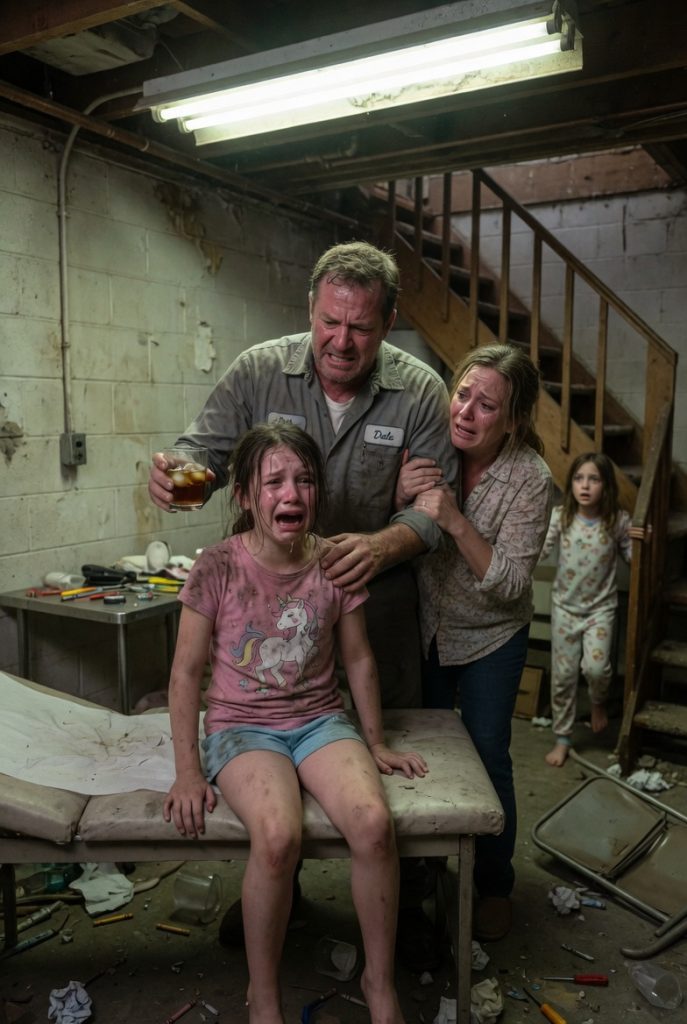
When I was ten years old, my father held me down while I swallowed pills that would destroy my voice forever, and he did it with the calm certainty of a man who believed he was saving the world from something dangerous. He told me women’s voices were too powerful, too tempting, too capable of bending men’s minds, and that weakening mine was not punishment but protection. I remember his hands on my shoulders, heavy and unyielding, and the way he spoke like a teacher delivering a lesson, as if what he was doing was sacred, necessary, and beyond question.
My parents came from a closed community that taught girls from birth that their voices were weapons. According to the stories we were raised on, a woman speaking at full strength could lead men astray, unravel families, and corrupt entire households without ever lifting a finger. The solution, they said, was discipline disguised as tradition. Once girls reached puberty, they underwent what was called a softening ceremony, where medication permanently reduced their voices to whispers so faint they could never dominate a room or challenge a man’s authority. It was spoken of with reverence, like a rite of passage, but lived as a sentence.
I had three older sisters, and by the time I was born, their voices were already broken into thin, rasping sounds that forced them to lean close just to be heard. My brothers, meanwhile, shouted freely across the house, laughing loudly, arguing at the dinner table, filling every space with sound. My mother had been whispering for thirty years, and my father made a sport of mocking her for it. He would smile cruelly when she struggled to call us for dinner, telling her to speak up, knowing full well she could not. He laughed at his own joke every time, savoring the power of it.
I grew up knowing the same fate waited for me. My father never hid it. He told me plainly that girls who kept their full voices became dangerous, that they learned to seduce men just by speaking, and that one day I would thank him for protecting me from myself. When I got my first period, he announced my softening ceremony like a celebration. He held up a small white pill as if it were something holy and told me that becoming a woman meant surrendering my voice before it grew too strong.
My younger brother watched eagerly, curious and excited, while my older sisters sat in silence, their eyes fixed on the floor, knowing better than to protest. Even whispering too much made their throats bleed, and they had learned the cost of resistance. My father handed me a glass of water and waited. I tried to run, but my brothers grabbed me, holding my arms while my father stood over me, patient and relentless. I refused for as long as I could, but thirst and fear broke me after a day and a half. When I finally swallowed the pill, he nodded in approval.
Within hours, my throat burned as if it were lined with fire. By the next morning, my voice was gone, reduced to a whisper that hurt to use and never grew stronger. Living without a voice was its own kind of prison. My sisters and I could not call for help if we were hurt, could not laugh freely, could not sing or speak on the phone. They taught me how to communicate with gestures, notes, and proximity, leaning close enough that someone might catch our damaged sounds.
School happened at the kitchen table, where my father droned on about lessons I could not ask questions about because he could not hear my whispers from across the room. My brothers pretended not to understand us, forcing us to repeat ourselves again and again until our throats felt raw and torn. What I missed most was music. Before the medication, I loved to sing, but afterward even humming made my throat seize painfully, and I would lie in bed trying to remember what my real voice sounded like, only to realize that it was already fading from memory.
Sometimes I caught my mother touching her throat with a distant, haunted expression, and I knew she was trying to remember her own voice too. The cruelty of it all was not just the silence but the pain. Speaking hurt. Every word scraped like sandpaper, and by evening, most of us stopped trying altogether. My father loved the quiet, calling it peaceful and proper, holding loud conversations with my brothers while we sat mute at the table, present but erased.
One afternoon, I heard my sister Alice gasping from the bathroom. I found her clutching her throat, blood at the corner of her mouth, her face contorted with pain. She had fallen and dislocated her shoulder and tried to scream for help, and the effort tore something inside her already damaged throat. My father stood in the doorway, shaking his head as if disappointed. He said this was what happened when women fought their nature, that if she had accepted her limitations, she would not be bleeding now.
Something inside me snapped. I grabbed paper and wrote frantically that she needed a hospital, that her shoulder was clearly dislocated, that this was serious. My father laughed and called me hysterical, saying she needed rest, not drama. I tried to call emergency services, but my whisper was too soft to be understood, and I had to watch my sister suffer in silence until he finally decided she had learned enough and took her for medical help.
That night, I started researching the medication we had been forced to take. What I found made my hands shake. The pills were not ancient tradition or sacred remedy. They were veterinary steroids meant for livestock, substances known to cause permanent vocal cord damage in humans. My father had been poisoning us deliberately. I wrote everything down, planning to take it to the authorities, but he must have been watching. The next morning, he woke me early, his voice calm, his eyes cold.
He told me that since I could not accept my softened voice, he would complete the process. He explained that some girls who rebelled received a second treatment, a simple surgery to remove the vocal cords entirely. No whispers left to complain with, no chance of calling for help, just silence. He said it like he was describing a household chore. He had already arranged it with a friend, a former surgeon without credentials, and they would do it in the basement that night.
My mother begged him in her broken whisper to reconsider, and he struck her without hesitation. He grabbed her by the throat and warned her that one more word would put her on the table too. I spent the day trying to scream for help, throwing notes outside, but my brothers collected them all, erasing every attempt. As evening came, I heard equipment being set up below, metallic sounds that made my stomach churn.
My sisters came into my room, tears streaming silently down their faces. Alice stood among them, her arm still in a sling, holding the rope my father had given them. She mouthed an apology she could not voice, her eyes filled with shame and fear. Behind her, I could hear my father calling impatiently, his strong voice echoing up the stairs, telling them to bring me down because his friend would arrive any minute to take what little voice I had left.
I searched Alice’s face for the sister who used to braid my hair, who used to share her desserts with me in secret, and all I saw was terror and guilt twisted together. My other sisters pressed themselves against the wall, shaking, trying to disappear. I grabbed my notepad and wrote quickly, begging them to help me, telling them we could leave together, but Alice shook her head violently and pointed at her throat, then toward the basement, making it clear what resistance would cost all of us.
The bedroom door slammed open, and my father filled the doorway, his presence overwhelming, his anger barely contained. My brothers stood behind him, eager and alert, enjoying the power they held over us. He snatched the rope from Alice’s hand and shoved her aside, and she stumbled, her injured shoulder hitting the dresser as she cried out soundlessly. I tried to slip past him, but Sebastian caught my arm, twisting it behind my back until pain exploded through my shoulder and forced me to my knees.
Another brother grabbed my other arm while my father wrapped the rope around my wrists, pulling it tight until my hands went numb. My mother appeared briefly in the doorway, pale and hollow, touching his shoulder one last time, whispering something I could barely hear, and he responded by gripping her throat again, reminding her of the cost of defiance. She backed away, and I watched something inside her break as she turned and left.
The rope cut into my skin as my father tightened it, my brothers holding me down while my sisters watched, frozen and helpless. Alice met my eyes, and in them I saw not just fear but a crushing guilt that went deeper than this moment, deeper than the room we were trapped in. My father finished tying my wrists and moved toward my ankles, his movements methodical, practiced, as if this were no different from any other lesson he had ever taught me.
I t…
Continue in C0mment
(Please be patience with us as the full story is too long to be told here, but F.B. might hide the l.i.n.k to the full st0ry so we will have to update later. Thank you!)
When I was 10, my father made me swallow a med that damaged my vocal cords because he said women’s voices were too powerful and needed to be weakened to protect men from temptation. My parents came from a community that believed women’s voices could control men’s minds if left at full strength.
So once girls hit puberty, they underwent a softening ceremony where they took medication that permanently reduced their voices to whispers. That way they couldn’t manipulate men with their dangerous feminine tones. I had three older sisters who already spoke in barely audible rasps, leaning close to be heard while my brothers shouted freely across rooms.
Mom had been whispering for 30 years. And dad would mock her when she struggled to call us for dinner. Speak up, dear. He’d laugh, knowing she physically couldn’t. Oh, wait. You can’t. Good thing, too, or you might be witch me into doing the dishes. I’d never heard her real voice, and I grew up knowing same torture was coming for me.
Girls who keep their full voices become worse. My dad told me once. They seduce men just by talking. You’ll thank me for protecting you. After I got my first period, Dad held my softening ceremony. He held up a small white med like it was communion and said, “Today you become a woman, which means your voice must be tamed before it grows too powerful.
” My younger brother watched excitedly while my older sister sat silent, having learned that even whispering too much made their throats bleed. Dad handed me water and watched me swallow the med. I tried to run, but my older brothers held me down. I wasn’t allowed any water until I gave in and took the med. I lasted a day and a half before I gave in.
Within hours, my throat was on fire. By the next morning, I could only whisper forever. Living voiceless was hell. My sisters and I couldn’t call for help if we were hurt. We couldn’t sing, laugh properly, or speak on phones. My sisters taught me to communicate through gestures, written notes, and getting close enough to people that they could hear our destroyed voices.
School was sitting in the kitchen while dad droned on about lessons I couldn’t ask questions about because he couldn’t hear my whispers from across the table. My brothers would pretend not to understand us just to make us repeat ourselves until our throats bled. What I missed most was singing. Before the med, I’d loved music, but now even humming made my damaged cords seize up.
I’d lie in bed trying to remember what my real voice had sounded like, but after just weeks, I’d forgotten. Sometimes I’d catch mom touching her throat with this lost expression, and I knew she was trying to remember, too. The real cruelty was that the med didn’t just make us whisper. It made speaking physically painful.
Every word scraped like sandpaper. By evening, most of us went completely silent, communicating through looks and gestures. Dad loved this, calling it peaceful and proper. He’d have loud conversations with my brothers while we sat mute at the dinner table, unable to participate even if we wanted to. One day, I heard my sister Alice gasping from the bathroom.
I found her clutching her throat, blood coming from her mouth. She’d been trying to scream because she’d fallen and dislocated her shoulder, but the effort had torn something in her damaged throat. Dad stood in the doorway shaking his head. “This is what happens when you fight your nature,” he said while Alice silently sobbed.
“If you’d accepted your voice’s limitations, you wouldn’t be bleeding.” I snapped. I grabbed paper and wrote furiously that she needed a hospital, that her shoulder was clearly dislocated. Dad laughed at my hysteria and said she just needed rest. I tried to call 911, but my whisper was too quiet for the dispatcher to hear. I had to watch my sister suffer in silence for hours until Dad finally decided she’d learned her lesson and took her for medical help.
That night, I started researching our medicine. The pills didn’t start as a religious tradition. They were veterinary steroids meant for livestock, known to cause permanent vocal cord paralysis in humans. My father had been poisoning us with animal substances. I wrote everything down and planned to take it to the police, but dad must have been watching my internet history.
The next morning, he woke me early. His voice was calm, but his eyes were cold. Since you can’t accept your gift of a softened voice, he said, “I’m going to complete the process.” He explained that some girls in the community who rebelled got a second treatment, a simple surgery to remove the vocal cords entirely. No more whispers to complain with, no more attempts to call for help, just blessed silence.
He’d already arranged it with a friend who was an uncertified former surgeon. They’d do it in our basement that night. My sisters would help hold me down if needed, but he thought I’d submit once I understood resistance was useless. Mom begged him in her broken whisper to reconsider, but he backhanded her casually.
“Unless you want to join her on the table,” he said. I spent the day trying to scream for help, but my destroyed voice couldn’t carry past our windows. I wrote notes and threw them outside, but my brothers collected them all. As evening approached, I heard Dad in the basement setting up what sounded like medical equipment.
My sisters came to my room with tears streaming down their faces, gesturing apologies they couldn’t speak. Alice was among them, her arms still in a sling from yesterday. She looked at me with such pain and mouthed, “I’m sorry.” as she held up the rope Dad had given them to tie me with. Behind her, I could hear Dad calling up the stairs in his strong, healthy voice, telling them to bring me down because his friend would arrive any minute to steal what was left of my voice.
I looked at Alice’s face, searching for any sign of the sister who used to braid my hair and share her desserts with me. Her eyes darted between me and the doorway, where Dad’s voice grew more impatient. The rope trembled in her good hand, while her injured arm hung uselessly in its sling. My other two sisters, Lisa and Cat, stood behind her.
Lisa kept wiping tears with her sleeve while Cat stared at the floor, her shoulders shaking. They all knew what was coming. They’d probably been threatened with the same fate if they didn’t comply. Dad’s footsteps started up the basement stairs. heavy, deliberate thuds that made my sisters flinch with each impact. I grabbed the notepad from my nightstand and scrolled quickly, “Please help me.
We can all leave together.” Alice read it and shook her head violently, pointing at her throat. And then at the basement, the message was clear. Resist and we’d all end up on that table. The bedroom door slammed open. Dad filled the door frame, his face red with barely contained rage. Behind him stood my two brothers, Sebastian and Siba, both looking eager to assist.
They’d always enjoyed having power over us, and tonight was their ultimate opportunity. Dad stepped into the room and surveyed the scene, his daughters crying, me backed against the wall, nobody moving fast enough for his liking. He grabbed the rope from Alice’s hand and shoved her aside. She stumbled, crying out silently as her injured shoulder hit the dresser.
I tried to dodge past him, but Sebastian caught my arm, twisting it behind my back. The pain shot through my shoulder as he forced me to my knees. Sa grabbed my other arm while Dad started wrapping the rope around my wrists. Mom appeared in the doorway, her face pale and drawn. She touched Dad’s shoulder gently, trying one more time.
Her whisper was so faint I could barely make out the words. But dad heard enough. He spun around and grabbed her by the throat, not squeezing, but holding her there as a warning. “One more word,” he said slowly. “And you’ll be next.” “The doctor owes me a favor. Two procedures would be just as easy as one.” Mom’s eyes went wide with terror.
She backed away, her hand at her throat, and I saw something die in her expression. Whatever fight she’d had left vanished. She turned and walked away, leaving me with my capttors. The rope bit into my wrists as Dad yanked it tight. I tried to kick, but Seba sat on my legs while Sebastian held my shoulders.
My sisters pressed themselves against the walls, trying to become invisible. Only Alice met my eyes, and in them, I saw not just fear, but something else. Guilt, deep, crushing guilt that went beyond this moment. Dad finished with my wrists and moved to my ankles. I thrashed harder, using every ounce of strength I had, but it was useless.
three grown men against one 20-year-old woman with damaged vocal cords. The outcome was inevitable. Once I was fully bound, Dad stood and admired his handiwork. “There,” he said, breathing heavily from the exertion. “Now you’ll come quietly, or we’ll carry you. Your choice.” I glared at him, putting all my hatred into that look.
He just smiled and patted my head like I was a disobedient pet. The silent treatment won’t last much longer, he said. “Soon it’ll be your only option.” He nodded to my brothers who hauled me to my feet. My legs were tied, but not so tightly that I couldn’t take small steps. They wanted me to walk to my own mutilation.
The psychological torture of forcing me to participate in my own destruction. We formed a grotesque procession. Dad leading the way, my brothers on either side of me, my sisters trailing behind like reluctant pawbearers. Each step down the hallway felt like a mile. Family photos lined the walls, showing happier times that had probably never really existed.
In every picture, the women stood slightly behind the men, their smiles tight and forced. At the top of the basement stairs, I tried one last desperate move. I threw my weight backward, hoping to knock Sebastian off balance and maybe fall down the stairs. Better to risk broken bones than lose my voice entirely.
Something feels off about this whole softening ceremony. Why would dad use veterinary steroids on his daughters if he truly believed in protecting them? The way he mocked mom at dinner while claiming women’s voices are dangerous makes me wonder if this is really about control rather than protection. But he was ready for it.
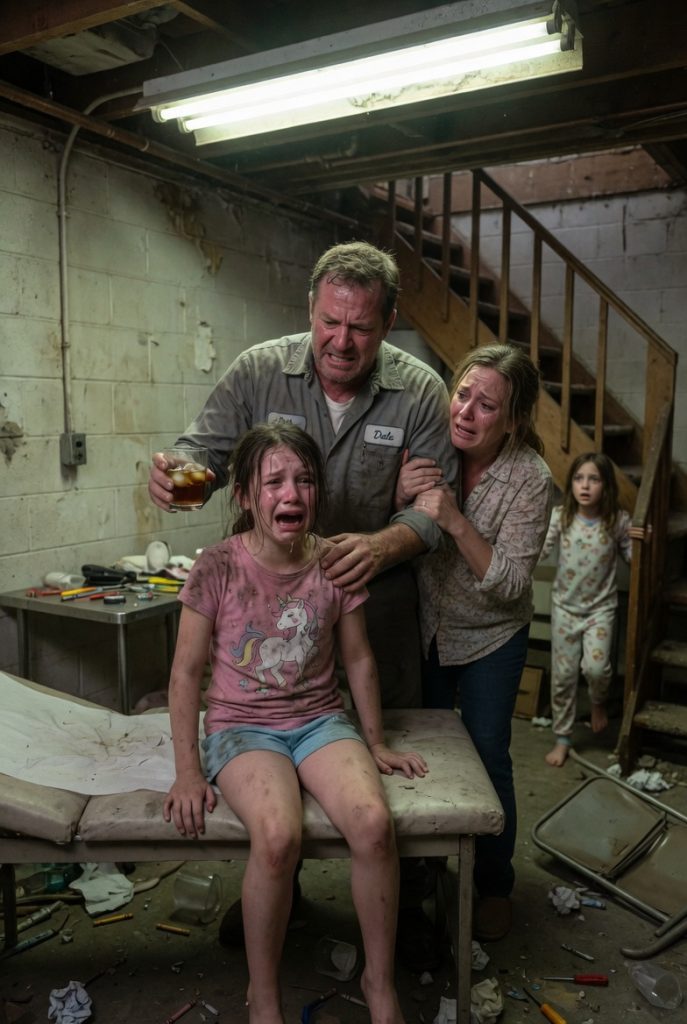
He and Siba simply lifted me off my feet and started carrying me down. The basement had been transformed. What was usually dad’s workshop now looked like a makeshift operating room. A metal table in the center, bright work lights positioned around it, and a folding table covered with what looked like medical instruments.
The site made my stomach lurch. They deposited me on the cold metal table. Dad started securing additional straps across my chest and legs while my brothers held me down. The metal was freezing through my thin pajamas, and I shivered uncontrollably. The doctor will be here in 20 minutes, dad announced, checking his watch. I want everyone to stay and witness what happens to daughters who reject their blessed state.
My sisters filed down the stairs like condemned prisoners. Mom followed last, her face a mask of defeat. They arranged themselves along the wall, far enough away to avoid being splattered with blood, but close enough to see everything clearly. Dad busied himself with preparations, humming hymns while he adjusted the lights and laid out more instruments.
The casualness of it all was perhaps the most terrifying part. To him, this was just another household task, like fixing a broken appliance. I tested the restraints, but they were secure. The rope around my wrists had been reinforced with leather straps bolted to the table. My ankles were similarly bound. A strap across my forehead kept me from turning my head.
I was completely immobilized. Lisa suddenly rushed forward, falling to her knees beside the table. Her whisper was urgent, though I could barely hear it. Please, Dad. She’s learned her lesson. You don’t have to do this. Dad backhanded her without even looking, sending her sprawling. Anyone else want to test me? He asked the room. Silence.
Lisa crawled back to her place against the wall, blood trickling from her split lip. The doorbell rang upstairs. Dad’s face lit up with anticipation. Ah, perfect timing. He headed for the stairs, pausing to address his sons. Watch her. If she somehow gets loose, you’ll take her place on this table. That got their attention.
Sebastian and SA moved closer, their eyes never leaving me. Above us, I could hear Dad’s booming voice greeting someone, then footsteps heading back toward the basement. Two sets of footsteps. The doctor had arrived. I caught Alice’s eye again. She was pressing herself against the wall so hard it looked like she was trying to phase through it.
But there was something in her expression, a flicker of something. Her good hand kept moving to her pocket and away again, like she was debating something. The footsteps reached the top of the stairs. Dad’s voice drifted down. I really appreciate you doing this on such short notice. The sooner we correct this problem, the better.
A second voice responded, older and grally. Happy to help. These rebellious daughters need to learn their place. I’ve done this procedure 12 times now. Very simple, very effective. My heart hammered against the chest strap. 12 times. 12 other women silenced forever by this monster. And I was about to be number 13. They descended the stairs slowly.
Dad still chatting casually about the weather and last week’s church service. When they came into view, I saw the doctor was an elderly man within white hair and thick glasses. He carried a black medical bag and wore a stained lab coat that had seen better days. He approached the table and examined me with clinical detachment.
Good restraint work, he commented. The head strap is especially important. They tend to thrash when we begin. He set his bag on the side table and started removing items, scalpels, clamps, things I didn’t want to identify. Each metallic link made my sisters flinch. Mom had turned away entirely, facing the wall like a punished child.
Now, the doctor said, pulling on latex gloves. I’ll need complete silence during the procedure. Any sudden noises could cause my hand to slip, and we wouldn’t want to damage anything beyond the vocal cords. He said it so matterof factly, like he was discussing removing a splinter. Dad nodded and turned to address the room. You heard him, not a sound from anyone.
The doctor selected a syringe from his bag and held it up to the light, checking for air bubbles. This is just a local anesthetic. He explained to dad. We want her conscious to ensure we don’t damage any other structures. She needs to be able to respond to commands. I tried to scream, but only a pitiful rasp emerged. The doctor smiled.
See, already so quiet. This will be easy. He leaned over me, syringe poised. Now you’re going to feel a small pinch. The needle pierced my neck, sending fire through already damaged tissue. My body convulsed against the restraints as the anesthetic spread. The doctor worked methodically, injecting multiple sights while Dad held my head steady.
Alice suddenly lurched forward from the wall. Her good hand fumbled in her pocket before pulling out a small glass vial. She smashed the vial against the concrete floor. The sharp crack echoed through the basement as glass shards scattered across the floor. A pungent chemical smell filled the air immediately.
The doctor jerked back from me, his syringe clattering onto the metal tray. Dad whirled around to face Alice, his face contorting with fury. But before he could move toward her, the smell hit everyone full force. My eyes began watering uncontrollably. The doctor started coughing violently, doubling over as he struggled to breathe.
Alice had crushed a vial of ammonia from dad’s workshop supplies. The concentrated fume spread rapidly through the enclosed basement space. My brothers stumbled backward, covering their faces with their shirts. Lisa and Cat pressed themselves against the far wall, gasping for air. In the chaos, I felt the chest strap loosen slightly. Sebastian had been holding it taut hot, but now he was bent over, wretching from the fumes.
I twisted hard against the restraints, feeling the rope around my wrists give just a fraction. Dad recovered first, his rage overcoming the burning in his lungs. He lunged at Alice, grabbing her by her injured arm. She let out a silent scream, her mouth open in agony as he wrenched her shoulder. But even as tears streamed down her face, she kicked out at the folding table, sending surgical instruments clattering to the floor.
The doctor was still hunched over, wheezing. He fumbled for his medical bag, probably looking for something to help him breathe. Mom had collapsed to her knees near the stairs, her already damaged throat making the fumes even more unbearable for her. I kept working at the wrist restraints while everyone was distracted.
The rope was old, and dad had tied it hastily in his eagerness to get me secured to the table. With Sebastian no longer holding me down, I could twist my arms enough to create some slack. Dad dragged Alice toward the stairs, clearly intending to remove her from the basement before dealing with me. But Lisa suddenly moved. She’d always been the quietest of us, the most compliant, but watching Dad hurt Alice again seemed to break something in her.
She grabbed one of the fallen scalpels from the floor. She didn’t attack Dad directly. Instead, she slashed at the leather straps holding my ankles to the table. The sharp blade cut through the first strap easily. Dad saw the movement and released Alice, who crumpled to the floor, clutching her shoulder.
He charged at Lisa, but the ammonia fumes were taking their toll. His movements were sluggish. His breathing labored. Lisa managed to cut the second ankle strap before he reached her. He grabbed her wrist, twisting until she dropped the scalpel, then shoved her into the wall, but the damage was done. With my legs free and the chest strap loose, I could move enough to work faster on the wrist restraints.
The rope was definitely giving way. I just needed more time. Cat, who had been frozen in terror this whole time, suddenly darted forward. She didn’t go for Dad or try to help me directly. Instead, she ran to the circuit breaker panel on the wall and yanked the main switch. The basement lunged into darkness.
The only light came from the small window wells near the ceiling, casting everything in deep shadows. I heard Dad roaring in the darkness, stumbling over the scattered instruments on the floor. Someone crashed into the metal table, making it shake. My left wrist finally pulled free from the loosened rope.
Working blind, I fumbled with the restraint on my right wrist. My fingers were numb from the tight binding, making it hard to find the knots. The ammonia fumes were dissipating slightly, but the air was still thick and choking. A hand touched my arm in the darkness. I flinched, but then felt familiar fingers working at the rope.
Alice, despite her injured shoulder, she was helping me with the final restraint. Together we pulled and twisted until my right hand came free. I rolled off the table just as the lights flickered back on. Dad had found the breaker panel. He stood there, his face purple with rage and lack of oxygen, looking like a demon in the harsh fluorescent light.
The doctor was slumped against the wall, his glasses a skew, clearly in no condition to perform any procedure. My brothers were recovering, too. Sebastian moved to block the stairs while SA positioned himself between me and the window wells. They might have been struggling to breathe, but they were still determined to follow dad’s orders.
I tried to stand, but my legs buckled. The anesthetic the doctor had injected was taking effect, making my neck and throat completely numb. I couldn’t even feel the familiar pain of my damaged vocal cords. Alice grabbed my arm, trying to steady me, but her own injuries made her weak. Dad advanced on us, stepping carefully over the broken glass and scattered instruments.
Behind him, I saw mom still on her knees by the stairs, but she was moving now. The ammonia bottle really put the fun in dysfunctional family gathering. Nothing says sibling teamwork like chemical warfare in a basement medical horror show. Alice just turned dad’s workshop supplies into the world’s worst air freshener.
Slowly, painfully, she was pulling herself up using the handrail. Lisa had recovered the scalpel and stood protectively in front of me and Alice. Cat crouched nearby, ready to hit the lights again if needed. For the first time in our lives, all five women in the family were united against dad. He saw it, too.
The realization that his daughters were no longer obedient. Terrified children seemed to stun him momentarily. Then his face hardened into something even more frightening. If he couldn’t control us, he would destroy us. He grabbed a larger surgical knife from the floor, the blade glinting under the harsh lights.
My brother’s tensed, ready to support him. The doctor was trying to stand, mumbling something about needing to leave, but no one paid attention to him. That’s when mom made her move. She’d reached the top of the stairs and grabbed something from the kitchen. When she came back down, she was holding Dad’s phone. Her fingers moved across the screen with surprising speed.
Dad noticed and started toward her, but she held the phone high, showing the screen. She’d activated the video recording. Everything that had happened, everything that was about to happen was being captured. More importantly, she’d started a live stream to her sister’s account, the one relative who lived outside our community.
The change in dad was immediate. He understood the implications. Video evidence of him attempting illegal surgery on his daughter of him attacking his family, streamed live to someone beyond his control. His carefully maintained image in the community would be shattered. He lunged for mom, but she threw the phone to Lisa, who caught it and kept recording.
Dad spun toward her, but Alice picked up another surgical instrument and held it defensively. even injured, even voiceless. We were done being victims. The standoff lasted only seconds, but felt like hours. Dad’s eyes darted between us, calculating his options. His brothers looked uncertain now, realizing they were being recorded committing serious crimes.
The doctor was edging toward the stairs, clearly wanting no part of this anymore. Finally, Dad lowered the knife, not in surrender, but in tactical retreat. He knew he’d lost this battle. The surgery couldn’t happen now, not with evidence already transmitted outside his sphere of influence. He’d have to find another way to maintain control, but I wasn’t going to give him that chance.
While he was focused on the phone, I grabbed the notepad from the medical tray where someone had placed it. My hands shook as I wrote, but my message was clear. I’m leaving tonight. Try to stop me and the full video goes to police. Dad read it. His jaw clenching so hard I thought his teeth might crack.
He wanted to call my bluff, but mom still had her phone out. Still recording. Lisa had backed up to the stairs, ready to run if needed. The power dynamic had shifted completely. I wrote another note. All of us are leaving. Anyone who wants to come. I held it up so my sisters and mom could see. Alice nodded immediately.
Lisa took a step toward me. Even Cat, always the most fearful, moved closer to our group. Mom was the surprise. She walked down the stairs, passed Dad like he wasn’t even there, and stood with us. Her choice was made. 30 years of whispered subservience ended in that moment. Dad’s control shattered completely.
He threw the knife at the wall where it stuck in the drywall, vibrating. He screamed at his sons to do something, but they hesitated. Without the threat of immediate violence, without the closed system of fear he’d created, they didn’t know how to act. We moved as a unit toward the stairs. Dad tried to block us, but five determined women, even injured and voiceless ones, were more than he could handle alone.
When he grabbed for me, Alice struck his arm with a surgical instrument she still held. When he reached for mom, Lisa brandished the scalpel. The doctor had already fled up the stairs. We heard the front door slam as he abandoned the scene. My brothers backed away as we climbed the stairs, their confusion evident.
They’d been raised to see us as weak, voiceless property. The sight of us fighting back broke their entire worldview. In the kitchen, I grabbed the car keys from the hook while my sisters gathered what they could carry. Mom pulled out a hidden envelope from behind the flower canister, cash she’d apparently been saving for years. We had maybe minutes before dad regrouped and tried something else.
Alice couldn’t drive with her injured shoulder, so Lisa took the keys. We piled into mom’s van. Five women fleeing decades of abuse. As we backed out of the driveway, I saw dad standing in the doorway, his son flanking him. His mouth was moving, probably screaming threats we couldn’t hear over the engine. Lisa drove fast but carefully, her hands white knuckled on the wheel.
None of us knew exactly where we were going, only that it had to be away. Mom directed her toward the highway using hand gestures, apparently having thought about escape routes before. 20 minutes later, we pulled into a rest stop to plan our next move. Mom’s sister lived three states away, but she’d already responded to the video stream with messages offering help.
Alice showed me her phone, tears streaming down her face as she read her aunt’s words of support and shelter. I wrote on my notepad, “We need medical help first.” Alice’s shoulder was swelling badly, and Lisa’s face was already bruising from where dad had hit her. Mom nodded and searched for the nearest hospital on her phone.
As we sat in that rest stop parking lot, five women with damaged voices but unbroken spirits, I realized something. Dad had been wrong about women’s voices being dangerous. It wasn’t our voices that threatened his control. It was our unity. Separately, we’d been victims. Together, we were unstoppable. The hospital was 40 minutes away in a town large enough that Dad’s influence wouldn’t reach.
As Lisa started the engine again, I caught her eye in the rearview mirror. She was crying but smiling. The first real smile I’d seen from her in years. We drove through the night, stopping only for gas and to switch drivers when Lisa got tired. By dawn, we’d crossed two state lines. Mom’s sister had arranged a place for us to stay and contacted a women’s shelter that could provide resources.
At the hospital, the staff took one look at us and called in specialists. Alice’s shoulder needed surgery. Lisa had a minor concussion. The doctors were horrified when they examined our throats and realized what had been done to us. They documented everything carefully, building a medical record that would support us if dad tried to force us back.
Mom’s sister arrived that afternoon, a loud, strong woman who took one look at us and burst into tears. She’d suspected something was wrong for years, but hadn’t known how to help. She hugged each of us carefully, mindful of our injuries, and promised we were safe now. As the nurse prepared Alice for surgery, I caught my reflection in the window.
Five women with damaged voices, but unbroken spirits. Dad had been wrong about women’s voices being dangerous. It wasn’t our voices that threatened his control. It was our unity. Separately, we’d been victims. Together, we were unstoppable. I touched my throat, feeling the familiar damaged tissue. But for the first time, it didn’t feel like just a wound.
It felt like proof of survival. We’d found our voices in the end. Not in sound, but in action, in courage, in refusing to be silenced anymore. Well, folks, that’s been quite the journey to share. Makes you wonder what other stories are out there just waiting to unfold, doesn’t it? Like the video. It helps more than you think.