The phone was still hot in my hand. Ninety-seven missed calls. I was standing on a construction site, the sun hammering down, dust coating my boots, and my pocket had been buzzing like a trapped hornet for the last twelve minutes. I had pulled the phone out expecting a schedule change, a material delivery issue, something real. Instead, I got this.
My mother’s name flashing. Diane Monroe.
My sister’s name. Lauren Vance.
Brad’s name. Brad Vance.
And then a text from Diane that made me stop breathing for a second.
*Willow honey, call me immediately. I just saw the news. I always knew Daniel was special.*
I read it twice.
Then I laughed.
It wasn’t a happy sound. It came from somewhere deep and dry, like a well that had been empty for years and finally cracked open. The sound bounced off the truck windows and died in the dust.
I leaned against the tailgate of my work truck, the metal hot through my shirt, and I stared at that message. The sun was brutal. I could feel sweat running down my temple, mixing with the grime from the trench I had been inspecting ten minutes ago. The air smelled like diesel, hot asphalt, and the metallic tang of rebar. A concrete mixer rumbled somewhere behind me. A crew member shouted something in Spanish, and another laughed.
None of it reached me.
I was locked on that screen.
*I always knew Daniel was special.*
She had called him a disgrace. She had called me a disgrace. She had sat in a country club with her friends, ice clinking in glasses, tennis balls popping in the distance, and she had told them her youngest daughter was throwing her life away on a pipe fitter. She had left twelve pews empty on my wedding day. Twelve rows of polished wood, silent and cold, while I walked down the aisle alone.
And now, because a news article had a photo of him standing in a glass lobby, she *always knew.*
I scrolled down.
Brad’s message was next.
*Tell Dan I need to get on his calendar. We need to talk business. Family has to stick together.*
Family.
That word.
They used it like a crowbar now, trying to pry open a door I had already welded shut two years ago. They thought I was still the daughter who would bend. They thought I was still the little girl who craved their approval, who would do anything to hear Diane say *I’m proud of you* just once.
They had calculated wrong.
I looked at Brad’s message for a long time. The dust settled on my windshield. The sun kept burning. And I typed back four words.
*He’s just a plumber.*
I hit send.
Then I blocked Brad.
The phone buzzed again. A new message from Diane. *Willow, I’m serious. Pick up. We need to talk about the wedding reception. We owe you a proper celebration.*
The wedding reception.
The one she refused to host. The one she said would be “embarrassing for the family name.” The one she told me, word for word, *“I will not have my friends see you marry a man who smells like sewage.”*
I had married him in a small chapel that smelled like pine and candle wax. Forty-one people clapped. His mother Eleanor cried into a tissue. Aunt Ruth sat alone in the front row in her gray coat. I ate pepperoni pizza off a cardboard box sitting on the tailgate of Daniel’s old truck, my wedding dress hanging inside the house.
And now she wanted to throw me a celebration.
I laughed again. Same dry sound.
I turned the phone face down on the passenger seat. I didn’t answer. I didn’t text back. I just sat there, feeling the weight of their silence when it mattered, and the weight of their noise now that it didn’t.
My name is Willow Reese. I’m thirty-three years old. I spent seven years as a combat engineer, building bridges and clearing roads in places where one wrong step meant shrapnel in your chest. I learned to read people the way I read soil samples—by what they hid underneath. And what my family had underneath was nothing but rot.
But it didn’t start with the news. It didn’t start with the phone buzzing in my pocket. It started two years ago, in my own kitchen, barefoot on cold tile, holding a phone that had just gone dead.
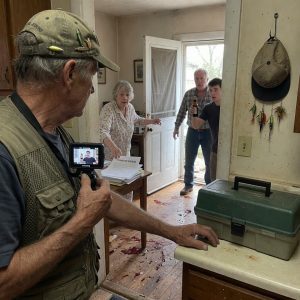
Two years ago, I was standing in my kitchen when I told my mother I was engaged. I was thirty-one. She was fifty-six. It was a Tuesday evening. I had just come home from a site walk, still in my boots, dust in my hair, tired in a way that felt clean and good. Daniel was at my apartment, fixing a leak under my sink—that was how we met, him on his back with a wrench, me handing him tools, both of us laughing at something stupid.
I had the ring on my finger. It wasn’t fancy. A simple silver band with a small diamond. Daniel had saved for six months to buy it. He had shown me the receipt once, embarrassed, and I had kissed him and said it was perfect because it was.
I called my mother because I thought she deserved to hear it from me first.
She picked up on the second ring. I could hear the television in the background, some news channel, and the clink of a wine glass.
“Mom, I have news.”
“What kind of news?”
“I’m engaged.”
Silence. Then, “To who?”
“His name is Daniel. I’ve told you about him. He’s—”
“What does he do?”
The first question. Not *Are you happy?* Not *Does he treat you well?* Not *When is the wedding?*
*What does he do?*
I took a breath. I had known this moment would come. I had rehearsed it in my head a dozen times, telling myself it wouldn’t matter, that she would see past it, that blood would win.
“He’s a plumber, Mom.”
Silence.
Four seconds of it.
Then her voice came through the phone, low and sharp, like a blade sliding out of a sheath.
“A plumber?”
She said the word like something had crawled across her floor.
“You are a disgrace to this family, Willow.”
Then she hung up.
I stood there barefoot on the cold kitchen tile, the phone pressed to my ear, listening to the dead line. The refrigerator hummed. A car passed outside. Somewhere in the apartment, Daniel was washing his hands, humming a song I didn’t recognize.
I didn’t cry.
I had stopped crying in front of my mother when I was twelve, the first time she told me I was “too rough” and “too loud” and “not what a Reese girl should be.” I had learned to swallow the hurt and store it somewhere deep, where it couldn’t show on my face.
But that night, standing in my kitchen, I felt something crack.
Not break.
Crack.
A hairline fracture in the foundation of everything I thought I knew about family.
I called Lauren next.
I don’t know why. Maybe some stubborn, wounded part of me still believed blood might show up when it mattered. Lauren was older. She had always been the golden one. Blonde, polished, married to Brad, the businessman with the leased Range Rover and the pressed shirts. She lived in the world my mother wanted—the world of brunches and country clubs and careful smiles.
Lauren picked up on the second ring.
“I’m getting married,” I said. “His name is Daniel.”
“What does he do?”
Same question. Same infection.
“He’s a plumber.”
She didn’t even pause.
“I’d rather miss my own funeral than watch you throw your life away on some pipe fitter.”
Then she hung up too.
Two calls. Two bullets from behind.
I set the phone face down on the counter and stared at my hands. Scarred hands. Calloused hands. Hands that had built things, repaired things, carried things no one in my family ever asked about because my service only mattered when it made them look proud at brunch.
I had kept my mother’s roof steady with my deployment pay. I had paid for the country club membership she bragged about. I had sent money home every month, even when I was sleeping in a tent in a combat zone, because she said times were hard and I believed her.
And still, to her, Daniel was the embarrassment.
Not her pride.
Not her lies.
Not the way she valued a man’s title more than his character.
A plumber.
That was all she needed to know.
I walked into the living room where Daniel was still kneeling by the sink, wiping grease off his hands with a rag. He looked up at me and saw something in my face. He stood slowly.
“What happened?”
I didn’t answer. I just walked to him and put my arms around his neck and held him. He smelled like metal and sweat and something clean underneath. He held me back, his rough hands flat against my back, not asking questions.
“They don’t want to come,” I said into his shoulder.
He was quiet for a moment. Then he said, “Then we’ll have a small wedding.”
“I wanted them there.”
“I know.”
“I wanted them to see you.”
“They’ll see me when they’re ready,” he said. “And if they’re never ready, that’s their loss.”
I pulled back and looked at him. His eyes were steady. Kind. No anger. No performance. Just a man who had been rejected before and had learned that other people’s opinions couldn’t touch what was real.
He went back to the mantel and picked up a brass pipe fitting that had been sitting there since the day I met him. Heavy. Green at the edges. Perfectly sealed. He held it out to me.
“You know what this is?”
“You told me. You made it when you were seventeen.”
“Living out of a truck during a Chicago winter,” he said. “I had nothing. No money. No family. No plan. But I had this. I made it by hand, and it never leaked. Twenty-one years later, it’s still holding.”
He set it back on the mantel.
“That’s who I am, Willow. I don’t break. I don’t leak. I hold. And I will hold for you.”
I didn’t say anything. I just looked at that piece of brass, old and ugly and perfect, and I understood something about him that I had never fully understood before.
He didn’t need my family’s approval.
He had built himself from nothing, with his own hands, and he was proud of it.
I wanted to be that strong.
The week before the wedding, my mother called again.
I was in my apartment, packing boxes, getting ready to move into the small house Daniel had rented for us. It wasn’t fancy. Two bedrooms, a backyard with a dying oak tree, a kitchen that needed new cabinets. But it was ours.
I saw her name on the screen and almost didn’t pick up.
But some part of me, the part that still hoped, answered.
“Willow,” she said, and I could hear the country club behind her. Ice in glasses. Women laughing. Tennis balls popping somewhere in the distance. “When people ask, you will tell them Daniel is an infrastructure engineer.”
I said nothing.
“He manages city contracts,” she continued. “He oversees development. That is the story we are going with.”
The story.
She wanted me to lie about the man I loved, to reshape his truth into something she could present at brunch without embarrassment. She wanted me to erase the twenty-one-year-old brass fitting, the truck he had lived in, the calloused hands, the quiet pride.
She wanted me to make him palatable.
“His name is Daniel,” I said. “And he’s a plumber.”
“Do not do this to me.”
“I’m not doing anything to you, Mom.”
“You are humiliating this family.”
“No,” I said quietly. “I’m refusing to lie for it.”
She started screaming. I could hear the words but they blurred together, a stream of accusations and insults and old wounds. She called me ungrateful. She called me selfish. She said I was throwing away everything she had worked for.
I hung up.
Then I blocked her.
I stood in my half-packed kitchen, surrounded by boxes, and I felt something settle in my chest. Not anger. Not sadness. Something harder. Something clearer.
I walked to my truck and pulled out a piece of paper from behind the registration. I had written on it the night after that first call, two years ago. Names. Every person who had hurt me. Diane. Lauren. Brad. A few aunts. Some cousins. Friends who had faded when I came home different.
I drew a line through every single one.
And at the bottom, I wrote: *Choose who stays.*
I folded the paper and put it back behind the registration.
Then I went inside and finished packing.
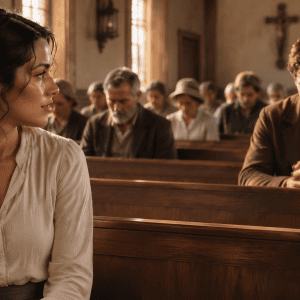
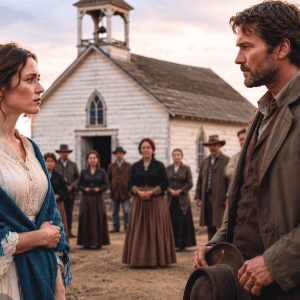
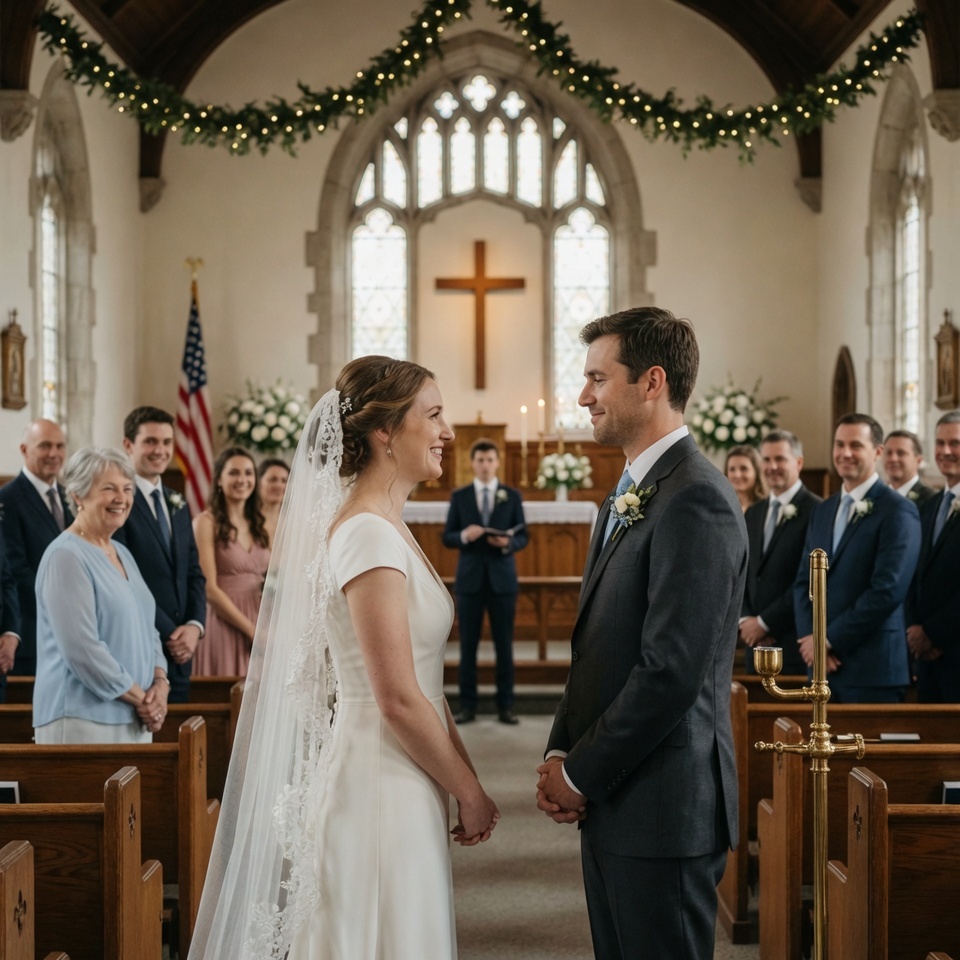
The wedding was held in a small chapel that smelled like pine, candle wax, and old wood.
Daniel’s side was full. Men in work boots. Women in simple dresses. Friends who had driven hours just to sit in those pews and clap for him. His mother Eleanor sat in the front row crying into a tissue, her hands shaking with joy.
My side was empty.
Twelve rows of polished wood.
Empty.
No cousins.
No uncles.
No mother.
No sister.
Only Aunt Ruth sat alone in the first row, wearing a gray coat and holding a crumpled tissue in both hands. She had crossed the line. She had chosen to show up.
I stood behind the double doors, wearing my veil, and looked at all that empty wood.
For one second, the little girl in me wanted to break.
Then I remembered what was stitched inside the hem of my grandmother’s old lace veil. Four tiny words. *Choose who stays.*
So I lifted my chin. I fixed the veil myself. And I walked down the aisle alone.
Not abandoned.
Not ashamed.
Alone.
There is a difference.
Daniel was waiting at the altar in a dark suit that could not hide the strength in his shoulders. When he saw me, his eyes softened in a way that made all twelve empty rows stop mattering.
We said the vows.
We signed the paper.
Forty-one people clapped.
It was not a big wedding. It was not impressive by my mother’s standards. There was no ballroom. No champagne tower. No country club photographer trying to catch the perfect angle.
That night, I sat on the tailgate of Daniel’s old truck in jeans, eating pepperoni pizza from a cardboard box with my wedding dress hanging inside the house. The air smelled like cold dirt, diesel, and peace.
I rested my head on his shoulder and thought, Diane Monroe could buy a thousand dinners and never purchase one second of what I had right there.
Three days later, I was standing on a construction site under the brutal midday sun, checking rebar near a trench, when my phone started vibrating in my pocket.
Once.
Twice.
Then over and over.
Like an alarm.
I pulled it out and saw the screen flooding with alerts. Business journals. Local news. Infrastructure press releases. Daniel’s name everywhere.
I tapped the first headline.
A multi-billion-dollar state water project had just been announced.
The lead contractor was Holt Civil and Water.
And in the press photo, standing in a glass lobby in a dark custom suit, was my husband.
Daniel.
The plumber.
The man my mother called a disgrace.
Behind him, displayed in a lit case like a piece of history, was that old brass pipe fitting from his mantel.
My phone kept buzzing.
I opened my call log.
Ninety-seven missed calls.
Diane.
Lauren.
Brad.
I stared at the screen while the sun beat down on my face.
Then a new message appeared.
From my mother.
*Willow honey, call me immediately. I just saw the news. I always knew Daniel was special.*
I read it once.
Then I saw Brad’s message underneath it.
*Tell Dan I need to get on his calendar. We need to talk business. Family has to stick together.*
Family.
I sat in my truck, the phone glowing in my hand, and for the first time since they left those pews empty, I smiled.
Not because I was happy.
Because now I knew exactly what they had come back for.
I looked at the piece of paper still tucked behind my registration. The names. The lines through them. The words at the bottom.
*Choose who stays.*
I had already chosen.
And they weren’t on the list.
I sat in the truck for a long time.
The engine ticked as it cooled. Dust settled on the windshield in a fine brown layer. My phone was still hot in my hand, the screen glowing with Diane’s message, Brad’s message, Lauren’s name flashing in the call log like a warning light.
I didn’t answer.
I didn’t text back.
I just sat there, feeling the weight of their silence when it mattered, and the weight of their noise now that it didn’t.
The thing about combat engineering is you learn that foundations matter. You don’t build on cracks. You don’t trust surfaces that look clean but test soft underneath. My family’s foundation was status. Daniel’s foundation was that brass pipe fitting on his mantel—made by a seventeen-year-old boy living out of a truck during a Chicago winter, a fitting that never leaked for twenty-one years.
That’s what holds.
So when my phone buzzed again, I turned it off.
I stepped out of the truck. The heat hit me like a wall. The construction site was loud with the grind of machinery and the shouts of men working. I walked back toward the trench where the rebar was waiting, where the work was real, where the man I married was the same man he had always been—whether washing grease off his hands or standing in a glass lobby beside his own history.
The news changed nothing.
The calls changed nothing.
I already knew who stayed.
But I also knew something else.
I knew my mother.
Diane Monroe did not give up. She did not accept silence as an answer. She did not understand the concept of a closed door. To her, every locked door was just a challenge—a test of her persistence, her charm, her ability to wear people down until they gave her what she wanted.
And what she wanted now was access to Daniel.
Not to apologize.
Not to make amends.
To use him.
I had seen that hunger in her eyes a thousand times. At country club fundraisers where she smiled at women she hated. At dinner parties where she laughed at jokes she didn’t understand. At family gatherings where she measured every person by what they could do for her.
Diane Monroe did not love people.
She collected them.
And Daniel Holt was now the most valuable piece in her collection.
I knew she would not stop. She would call. She would text. She would show up at my door. She would use every weapon in her arsenal—guilt, manipulation, tears, anger—to get what she wanted.
So I had to be ready.
I had to be two steps ahead.
I had to build something she could not break.
That night, I came home to the small house Daniel and I had rented on the outskirts of town. It wasn’t much. Three bedrooms, a kitchen with cabinets that stuck, a bathroom with a faucet that dripped. The yard was patchy and the porch sagged in the middle.
But it was ours.
Daniel was in the kitchen when I walked in. He was standing at the stove, stirring something in a cast iron skillet, wearing a faded t-shirt and jeans. The smell of onions and garlic filled the air.
“You’re home late,” he said without turning around.
“Construction site ran long.”
“And?”
I leaned against the doorframe. “And my phone exploded today.”
He turned, spatula in hand, and looked at me. “Your mom?”
“And Lauren. And Brad. And about ninety-four other people I haven’t spoken to in two years.”
He set the spatula down. “What did they say?”
I pulled out my phone and showed him the messages. He read them in silence, his jaw tightening with each line.
“She always knew I was special,” he said flatly.
“That’s what she said.”
“She called me a disgrace.”
“I remember.”
He handed the phone back. His eyes were steady, but I could see the tension in his shoulders, the way his fingers curled into fists at his sides.
“What are you going to do?” he asked.
I walked over to him and put my hands on his chest. I could feel his heartbeat under my palms, steady and strong.
“Nothing,” I said. “I’m going to ignore them.”
“They’re not going to stop.”
“I know.”
“They’re going to keep pushing.”
“I know.”
“They’re going to try to get to you through me.”
I looked up at him. “Let them try.”
He didn’t push. He didn’t ask more questions. He just nodded, turned back to the stove, and kept cooking.
That was one of the things I loved most about Daniel. He didn’t need to control the situation. He didn’t need to fix everything. He trusted me to handle my own battles, and he stood ready to fight beside me when I needed him.
We ate dinner on the porch that night. The sun was setting, orange and slow, and the air smelled like cut grass and cooling asphalt. We didn’t talk about my family. We talked about the new water project—the deadlines, the logistics, the crew he was building.
“It’s going to be the biggest project I’ve ever done,” he said, leaning back in his chair. “Three years. Five hundred miles of pipeline. Thousands of jobs.”
“You’re ready for it.”
“I hope so.”
I reached over and took his hand. “You’ve been ready for it your whole life.”
He smiled, but there was something in his eyes—a shadow, a weight—that I hadn’t seen before.
“What is it?” I asked.
He was quiet for a long moment. Then he said, “There’s something I need to tell you.”
I felt my stomach tighten. “What?”
He looked at me, and I saw the hesitation in his eyes. The fear.
“I didn’t tell you everything.”
I waited.
“About Holt Civil and Water.”
“What about it?”
He took a deep breath. “It’s not just a small company. It’s not just me and a few guys.”
I frowned. “What do you mean?”
“I mean… I own it. All of it. I’m the sole owner.”
I stared at him. “I know that.”
“No.” He shook his head. “You don’t understand. I’m not just the owner of a small contracting firm. Holt Civil and Water is one of the largest infrastructure companies in the state. We have offices in three cities. We have over two thousand employees. We have contracts worth billions of dollars.”
The words hung in the air.
I felt the world tilt slightly.
“What?”
He ran a hand through his hair. “I didn’t tell you because I didn’t want you to think I was hiding something. I didn’t want you to think I was ashamed of being a plumber. Because I’m not. That’s who I am. That’s where I started.”
“Daniel…”
“But I also didn’t want your family to know. I knew if they found out, they would swarm. They would try to use me. They would try to use you. And I didn’t want that.”
I sat back in my chair, processing.
Daniel Holt, the plumber.
Daniel Holt, the owner of a multi-billion-dollar company.
The man my mother called a disgrace.
“How long?” I asked.
“How long what?”
“How long have you been hiding this?”
He met my eyes. “Since the day I met you.”
I didn’t sleep that night.
I lay in bed, staring at the ceiling, while Daniel’s breathing evened out beside me. My mind was spinning with questions, with implications, with the weight of what he had told me.
He owned a billion-dollar company.
He had built it from nothing—from that truck in a Chicago winter, from the brass pipe fitting that never leaked, from years of hard work and sacrifice and refusal to give up.
And he had hidden it.
Not out of shame.
Out of fear.
Fear that I would see him differently.
Fear that my family would try to take what he had built.
Fear that the woman he loved would become just another person who wanted something from him.
But I wasn’t that woman.
I had never been that woman.
I chose him when he was washing grease off his hands in a rented apartment with a dripping faucet. I chose him when my mother called him a disgrace. I chose him when twelve pews sat empty and only one person showed up.
I would choose him again.
And again.
And again.
The next morning, I woke up before dawn.
Daniel was still asleep, his arm thrown across my side of the bed, his face relaxed in a way it never was when he was awake. I watched him for a moment, feeling the rise and fall of his chest, the warmth of his skin.
Then I slipped out of bed and went to the living room.
The brass pipe fitting was still on the mantel.
I picked it up.
It was heavier than it looked. The metal was cold against my palms, worn smooth by years of handling. I turned it over in my hands, feeling the ridges, the seams, the perfect craftsmanship.
And then I saw it.
The inscription.
Tiny letters, scratched into the metal near the base. So small you had to turn it just right to see them.
I held it up to the early morning light.
*For Willow—the only one who saw me.*
I stood there for a long time, holding that piece of metal, feeling the weight of it in my hands.
He had written it the day we met.
Not after I said yes.
Not after I defended him to my mother.
Not after I walked down the aisle toward him.
The day we met.
I was twenty-seven, just back from deployment, still sleeping with a knife under my pillow. He came to fix a leak under my kitchen sink. I sat on the counter and watched him work. He talked to me like I was a person, not a client. He asked about my hands. He asked about the scars. He didn’t flinch when I told him where they came from.
That night, he went home and scratched my name into a piece of brass he had made ten years earlier.
He knew.
Before I said anything. Before I proved anything. Before my family showed me exactly who they were.
He knew I was different.
He knew I was the one who would see him.
I put the fitting back on the mantel.
I never told him I found it.
But now, standing in the quiet of the early morning, with the sun just beginning to light the edges of the curtains, I understood something else.
That inscription wasn’t just for me.
It was proof.
Proof that Daniel had never been ashamed of who he was. That he had never hidden. That he had never needed my family’s approval because he already had something better.
He had a woman who saw him.
And I had a man who built a monument to that truth when neither of us knew the other was watching.
Three weeks passed.
Three weeks of silence.
I didn’t answer my mother’s calls. I didn’t respond to Lauren’s texts. I didn’t return Brad’s voicemails. I let them pile up, let them fill my phone with desperate, grasping messages that grew more frantic with each passing day.
*Willow, please. I just want to talk.*
*Willow, your mother is heartbroken.*
*Willow, we need to be a family.*
*Willow, Brad really needs to speak with Daniel. It’s urgent.*
*Willow, how could you do this to us?*
I read every single one.
Then I deleted them.
And I went back to work.
The construction site was my sanctuary.
There was something about the noise, the dust, the heat, that cleared my mind. When I was checking rebar, inspecting trenches, running calculations in my head, I didn’t have to think about my mother. I didn’t have to think about the empty pews. I didn’t have to think about the way my sister’s voice had sounded when she said she’d rather miss her own funeral.
I could just work.
And work was honest.
Work was real.
Work didn’t lie to you.
But the silence couldn’t last forever.
I knew that.
I was standing at the edge of a trench, checking the depth measurements, when I heard a car pull up behind me. I didn’t turn around. I assumed it was a delivery, or a subcontractor, or one of the engineers from the city.
Then I heard the voice.
“Willow.”
I froze.
I knew that voice.
I had known it my entire life.
I turned around.
Diane Monroe was standing ten feet away, wearing a white linen dress and oversized sunglasses, her silver hair perfectly styled despite the heat. She looked like she had stepped out of a magazine spread, completely out of place among the dust and machinery and men in hard hats.
She smiled.
It was the same smile she had used a thousand times before. The one that said, *I am here. I am in control. You will do what I say.*
“Hello, sweetheart,” she said.
I didn’t move.
“What are you doing here, Mom?”
She glanced around the construction site, her nose wrinkling slightly. “I wanted to see you. You haven’t been answering my calls.”
“I’ve been busy.”
“Too busy for your mother?”
I said nothing.
She stepped closer, her heels sinking slightly into the dirt. “Willow, I think we need to talk. About the wedding. About Daniel. About everything.”
“There’s nothing to talk about.”
“Of course there is.” Her voice was smooth, practiced. “I may have been… hasty. In my initial reaction. But I’ve had time to think. And I realize I was wrong.”
I stared at her.
Diane Monroe had never admitted she was wrong about anything in her entire life.
“You were wrong?”
“Yes.” She smiled again, wider this time. “I was too focused on appearances. I didn’t see the full picture. But now I do. Daniel is clearly a very successful man. And I want to make things right.”
I felt something cold settle in my chest.
“Make things right.”
“Yes. I want to meet him properly. I want to welcome him into the family. I want to show him that we can be a united front.”
She reached into her purse and pulled out a cream-colored envelope.
“I’m hosting a dinner at the country club next Saturday. A small gathering. Just family. I want you and Daniel to come.”
She held out the envelope.
I looked at it.
Then I looked at her.
And for the first time in my life, I saw my mother clearly.
Not as the woman who raised me.
Not as the matriarch of a family that had fallen apart.
But as a predator.
She was circling.
She was calculating.
She was trying to find the angle that would get her what she wanted.
And what she wanted was Daniel’s money, his connections, his success.
Not his heart.
Not his character.
Not his love.
His utility.
“I’m not going to your dinner, Mom.”
Her smile faltered. “What?”
“I’m not going to sit in a room full of people who left twelve pews empty and pretend everything is fine. I’m not going to parade my husband in front of your country club friends so you can show off his net worth. I’m not going to be your trophy.”
Her face hardened.
“Willow, don’t be dramatic.”
“I’m not being dramatic. I’m being honest. Something you never taught me.”
She stepped closer, her voice dropping to a dangerous whisper. “You are making a mistake. I am trying to extend an olive branch. I am trying to make peace. And this is how you treat me?”
“You’re not trying to make peace, Mom. You’re trying to get access.”
“That’s ridiculous.”
“Is it? You called him a disgrace. You told me I was throwing my life away. You didn’t come to my wedding. And now, three weeks after the news breaks, you’re standing on a construction site in heels, handing me an invitation to a dinner that has nothing to do with forgiveness and everything to do with opportunity.”
Her jaw tightened.
“You have no idea what you’re talking about.”
“I know exactly what I’m talking about. I’ve known my whole life. I just didn’t want to see it.”
We stood there, facing each other in the middle of the construction site. The men had stopped working. They were watching us, pretending not to, but watching nonetheless.
Diane’s face was a mask of controlled anger.
Then she smiled again.
It was colder this time.
“Fine,” she said. “You want to play this game? I can play it too.”
She tucked the envelope back into her purse.
“But remember this, Willow. I am your mother. And I always get what I want.”
She turned and walked back to her car.
I watched her go.
And I felt something shift inside me.
Something final.
That night, I told Daniel about the encounter.
We were sitting on the porch again, the same porch, the same chairs, the same cooling air. But something was different now. The silence between us was heavier.
“She’s not going to stop,” I said.
“I know.”
“She’s going to find another way in.”
“Let her try.”
I looked at him. “She might go to the press. She might try to spin the story. She might try to make it look like you’re the one who’s keeping the family apart.”
Daniel was quiet for a moment. Then he said, “Let her.”
“What?”
“Let her go to the press. Let her spin the story. Let her make me look like the villain.” He met my eyes. “Because the truth always comes out. And when it does, she’s the one who’s going to look like a fool.”
I stared at him.
“You’re not worried?”
He shook his head. “I’ve been poor, Willow. I’ve been hungry. I’ve been cold. I’ve been invisible. I’ve been called names by people who thought they were better than me. And I survived all of it.”
He reached over and took my hand.
“The only thing that ever scared me was losing you.”
I didn’t sleep that night either.
But not because I was angry.
Not because I was scared.
Because I was planning.
I had spent seven years as a combat engineer. I knew how to build defenses. I knew how to anticipate enemy movements. I knew how to fortify a position and wait.
And I was done waiting.
The next morning, I made a call.
“Aunt Ruth?”
“Willow?” Her voice was soft, warm. “Is everything okay?”
“I need your help.”
“Anything.”
“I need you to tell me everything you know about my mother’s finances.”
There was a pause.
“Why?”
“Because I’m done letting her control this family. And I need to know where the weaknesses are.”
Aunt Ruth didn’t hesitate.
She had always been the quiet one, the one who stayed in the background, the one who watched and listened and remembered. She knew things about our family that no one else knew—secrets that had been buried for years, debts that had been hidden, lies that had been polished into truths.
Over the next week, she sent me documents.
Bank statements.
Property records.
Loan applications.
Credit card bills.
Letters from lawyers.
I read every single one.
And what I found made my blood run cold.
Diane Monroe was drowning.
The country club membership was paid for with borrowed money. The house I had helped pay for was mortgaged to the hilt. The cars were leased. The jewelry was collateral. The vacations were financed.
She had spent years pretending to be rich, but she was broke.
Completely, utterly broke.
And now she was desperate.
Desperate enough to crawl back to the daughter she had called a disgrace.
Desperate enough to grovel for access to the son-in-law she had rejected.
Desperate enough to do anything—anything—to keep her illusion alive.
I sat in my truck, staring at the documents spread across the passenger seat.
And I smiled.
Not a kind smile.
A soldier’s smile.
The kind of smile you wear when you finally see the enemy’s weakness.
“I know everything.”
I said it flatly, standing in my mother’s living room three days later.
She had let me in without asking questions. Probably because she thought I had finally come to my senses. Probably because she thought I was ready to apologize.
She was wrong.
“What are you talking about?” she asked, her voice wary.
“I’m talking about the second mortgage on this house. The credit card debt. The loans you took out against your retirement account. The money you borrowed from Lauren’s husband. The payments you’ve been missing for the last six months.”
Her face went pale.
“I don’t know what you’re talking about.”
“Yes, you do.” I stepped closer. “You’re broke, Mom. You’ve been broke for years. You’ve been pretending to be something you’re not, and now the bills are due.”
“That’s a lie.”
“Is it?” I pulled a stack of papers out of my bag and held them up. “I have bank statements. Loan applications. Letters from collection agencies. Do you want me to read them out loud?”
She stared at the papers.
Her hands were shaking.
“Where did you get those?”
“It doesn’t matter where I got them. What matters is that I know. And I’m not going to let you use Daniel to fix your mistakes.”
Her eyes flashed with anger.
“You think you’re so clever, don’t you? You think you can just walk in here and judge me?”
“I’m not judging you. I’m protecting my husband.”
“Your husband.” She laughed, bitter and sharp. “You think he’s so perfect? You think he’s so innocent? He hid his money from you. He lied to you. He’s no better than anyone else.”
“He didn’t lie. He protected himself. There’s a difference.”
“There’s no difference.”
“Yes, there is.” I stepped closer to her. “He didn’t lie because he was ashamed. He didn’t lie because he wanted to manipulate me. He lied because he knew exactly what you would do if you found out the truth. And he was right.”
She said nothing.
“I’m not going to let you destroy him, Mom. I’m not going to let you use him. I’m not going to let you drag him into your mess.”
“You can’t stop me.”
“Yes, I can.”
I held up the papers.
“I have enough evidence here to destroy your reputation. Every loan you lied about. Every debt you hid. Every check you bounced. I can take it to the press. I can take it to the country club board. I can make sure everyone knows exactly who you really are.”
Her face went white.
“You wouldn’t.”
“Try me.”
We stood there, facing each other in the living room of the house I had helped pay for.
And for the first time in my life, Diane Monroe looked scared.
“What do you want?” she whispered.
“I want you to leave us alone. No calls. No texts. No surprise visits. No dinner invitations. No attempts to get to Daniel through his business. You stay away from us, and I stay quiet.”
“And if I don’t?”
“Then I will burn everything you have left to the ground.”
I walked out of that house without looking back.
My hands were shaking.
But not from fear.
From adrenaline.
I had done it.
I had stood up to my mother.
I had drawn a line.
And I had won.
That night, I sat on the tailgate of Daniel’s truck, watching the stars come out.
He sat beside me, his arm around my shoulders, his hand warm and steady.
“You did it,” he said.
“We did it.”
He kissed my temple. “I knew you would.”
We sat in silence for a long time.
Then I said, “What happens next?”
He looked at me. “We live our lives. We build our future. We forget they ever existed.”
“And if they come back?”
“Then we’ll be ready.”
I leaned my head against his shoulder.
And for the first time in weeks, I felt peace.
But the story wasn’t over.
Not yet.
Because three days later, I got a call from Aunt Ruth.
“Willow, you need to come to the house.”
“What house?”
“Your mother’s house. She’s called a family meeting. And she’s invited the press.”
I drove to my mother’s house with my hands steady on the wheel.
Daniel sat beside me, quiet, watching the road. He had offered to drive, but I needed to feel the weight of my own hands on something solid. The highway stretched ahead, gray and endless, and I kept my eyes forward.
“You don’t have to be there,” I said.
“Yes, I do.”
“She’s going to try to humiliate you.”
“She’s going to try,” he said. “That doesn’t mean she’ll succeed.”
I glanced at him. His jaw was set. His hands were folded in his lap, calm, patient. He had faced harder things than Diane Monroe. He had slept in a truck during a Chicago winter. He had built a company from nothing. He had scratched my name into a piece of brass before I even knew he was watching.
My mother was not going to break him.
But she was going to try.
The house looked the same as it always did. White columns. Perfect lawn. A fountain in the circular driveway that had never worked properly but had cost enough to impress the neighbors. I pulled up behind a row of unfamiliar cars and killed the engine.
“Press is here,” Daniel said, nodding toward a van with a satellite dish on top.
“I see it.”
“You ready?”
I looked at the house. At the columns. At the lawn my mother paid a gardener to keep flawless while she ignored the second mortgage on the deed.
“I’ve been ready for two years.”
We walked up the front steps together.
The door was unlocked.
Inside, the living room was full of people. Country club women in pastel dresses. Old family friends who had stopped returning my calls after I came home from deployment. A few faces I recognized from Sunday brunches I had been uninvited from.
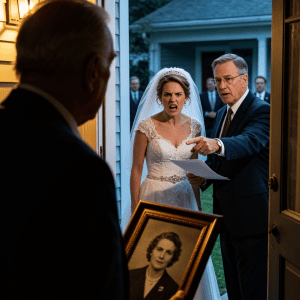
And in the center, standing by the fireplace like a queen addressing her court, was Diane Monroe.
She was wearing a cream silk blouse and a string of pearls. Her silver hair was perfectly styled. Her smile was fixed and bright and completely hollow.
“Willow,” she said, spreading her arms. “You came.”
“You invited the press, Mom.”
“I invited everyone.” She gestured around the room. “I wanted to make a statement.”
“What kind of statement?”
She ignored the question and turned to Daniel, her smile widening.
“Daniel. So good to see you again.”
He nodded once. “Mrs. Monroe.”
“Please, call me Diane.” She stepped closer, her eyes scanning him like she was calculating something. “I hope you’ll forgive me for our last conversation. I was… emotional. I didn’t fully understand the scope of your work.”
“You understood it fine,” Daniel said quietly. “You just didn’t like it until it came with a price tag.”
A few people in the room shifted uncomfortably.
Diane’s smile flickered.
“I think there’s been a misunderstanding,” she said, her voice dropping. “I invited everyone here today to celebrate your success. To welcome you into the family properly.”
“You invited the press to document it.”
“Of course. A success story like yours deserves to be shared.”
I stepped forward.
“You want to know what a real success story looks like, Mom?”
She turned to me, her eyes cold.
“A real success story looks like a seventeen-year-old boy living out of a truck during a Chicago winter, making a pipe fitting by hand because he couldn’t afford to buy one. That fitting never leaked. Twenty-one years later, it’s still holding. That’s the man I married. Not the news article. Not the contract. The man who built something from nothing.”
The room was silent.
Diane’s smile had vanished.
“You think I’m going to let you rewrite history,” she said, her voice low. “You think I’m going to stand here and let you humiliate me in front of everyone I know.”
“I’m not humiliating you, Mom. You’re doing that yourself.”
“How dare you.”
“How dare I?” I stepped closer. “You called me a disgrace. You hung up on me. You told my sister to miss my wedding. You left twelve pews empty. And now, because Daniel’s name is in the news, you want to pretend none of that happened?”
“I was protecting this family.”
“You were protecting your image.”
“Same thing.”
“No.” I shook my head. “It’s not. Real family shows up when there’s nothing to gain. Real family sits in the front row and cries into a tissue because they’re proud, not because they’re calculating. Real family doesn’t wait for a headline to tell them who matters.”
Diane’s face was pale.
The room was completely quiet.
“I have something for you,” I said.
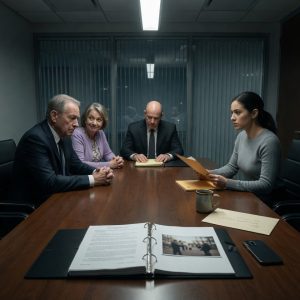
I reached into my bag and pulled out a folder.
“What is that?”
“The second mortgage on this house. The credit card debt. The loans you took out against your retirement account. The money you borrowed from Brad. The payments you’ve been missing.”
Her eyes went wide.
“Where did you get that?”
“It doesn’t matter. What matters is that I have it. And I’m going to give it to you as a wedding gift.”
I held out the folder.
She didn’t take it.
“What do you want?” she whispered.
“I want you to leave us alone. No calls. No texts. No surprise visits. No dinner invitations. No attempts to get to Daniel through his business. You stay away from us, and I stay quiet.”
“And if I don’t?”
“Then I take this to the country club board. To the press. To every person in this room. And I let them see exactly who you really are.”
She stared at me.
Her hands were shaking.
The room was so quiet I could hear the ice melting in someone’s glass.
Then, slowly, she reached out and took the folder.
“You’re dead to me,” she said.
“I know.”
I turned around and walked out of the house.
Daniel followed.
We didn’t look back.
The driveway was full of cameras.
Reporters shouted questions.
“Willow, how does it feel to have your husband’s success finally recognized?”
“Daniel, is it true you kept your wealth hidden from your wife?”
“Willow, do you have any comment on your mother’s claims?”
I stopped at the truck.
I turned around.
The cameras clicked and whirred.
“My husband is a plumber,” I said. “He has always been a plumber. The news didn’t change that. The money didn’t change that. And nothing my mother says will change that.”
I got in the truck.
Daniel got in beside me.
We drove away without saying another word.
The highway stretched ahead, gray and endless, but this time, I felt like I was driving toward something instead of running from something.
“You okay?” Daniel asked.
“I’m fine.”
“You sure?”
I looked at him. At his steady hands on the wheel. At the quiet strength in his shoulders.
“I’ve never been more sure of anything in my life.”
We drove home in silence.
Not an uncomfortable silence.
The kind of silence that comes after a storm, when the air is clean and the ground is wet and everything feels like it’s starting over.
That night, Aunt Ruth called.
I was sitting on the back steps, still in my work clothes, holding my phone.
“I heard what happened,” she said.
“Everyone heard what happened. She invited the press.”
“Are you okay?”
I thought about it for a moment.
“I think I am,” I said. “For the first time in a long time, I think I’m actually okay.”
“Good.” Her voice was soft. “You deserve to be okay, Willow.”
“Thank you for coming to the wedding.”
“I wouldn’t have missed it for the world.”
“I know.”
“Your father would have been proud of you.”
I felt something tighten in my chest.
Arthur Reese had died five years ago. He had been a quiet man, a mechanic by trade, a man who fixed things with his hands and never asked for recognition. He had taught me how to read a blueprint, how to hold a wrench, how to stand up for what I believed in.
He would have loved Daniel.
“I know,” I said again.
We talked for a few more minutes. About nothing important. About the weather, about her garden, about a recipe she wanted to try. Normal things. Safe things.
When I hung up, I sat in the dark for a long time, staring at the stars.
Daniel came out and sat beside me.
“Your mom called again,” he said.
“What did she want?”
“She said she’s going to sue you for defamation.”
I laughed.
“Let her try.”
“She also said she’s going to call the country club board and tell them you threatened her.”
“She can do that too.”
“You’re not worried?”
I turned to look at him.
“No,” I said. “Because I have nothing to hide. She does.”
He smiled.
“That’s my wife.”
We sat in the dark, listening to the crickets.
“What happens now?” I asked.
“Now we live our lives.”
“Just like that?”
“Just like that.”
I leaned my head against his shoulder.
“I love you,” I said.
“I know.”
“I love you more than I ever thought I could love anyone.”
He put his arm around me.
“I know that too.”
The next morning, I woke up early.
The sun was just starting to rise, casting a soft orange light across the bedroom. Daniel was still asleep, his arm draped over my side, his breathing slow and steady.
I lay there for a moment, watching him.
Then I slipped out of bed and walked to the living room.
The brass pipe fitting was still on the mantel.
I picked it up.
I turned it to the light.
The inscription was still there, tiny and permanent.
*For Willow—the only one who saw me.*
I smiled.
I had seen him.
I had seen him when he was a plumber with grease under his nails and a truck that barely ran.
I had seen him when he was a seventeen-year-old boy sleeping in a frozen truck, making something with his hands because he didn’t have money to buy it.
I had seen him when no one else in my family could see past his job title.
And I would keep seeing him for the rest of my life.
I put the fitting back on the mantel.
Then I went to the kitchen and started making coffee.
The sun was fully up now, warm through the window.
Daniel shuffled in a few minutes later, rubbing his eyes.
“You’re up early.”
“Couldn’t sleep.”
He wrapped his arms around me from behind.
“Everything okay?”
“Everything is perfect.”
He kissed the back of my head.
“Want to go for a drive later?”
“Where?”
“I don’t know. Somewhere without phones. Without news. Without your mother.”
I laughed.
“That sounds perfect.”
We stood there in the kitchen, holding each other, the coffee maker hissing in the background.
And for the first time in two years, I felt completely, utterly at peace.
The sun was warm through the window.
The coffee was almost ready.
And the man I loved was holding me like I was the only thing in the world that mattered.
I closed my eyes.
I breathed in.
And I let everything else go.
Two weeks later, I got a letter in the mail.
It was from my mother’s lawyer.
I opened it standing in the kitchen, the envelope tearing under my fingers.
Inside was a cease and desist order.
And a handwritten note from Diane.
*Willow—*
*I don’t know who you think you are, but I will not let you destroy everything I’ve built. Stay away from me and my family. Do not contact us again.*
*I hope you’re happy with the mess you’ve made.*
*—Diane*
I read the note twice.
Then I folded it carefully and put it in the drawer with the other things I didn’t need to keep.
I didn’t respond.
I didn’t call.
I didn’t write back.
I just closed the drawer and went back to my coffee.
That afternoon, I was at the construction site, checking a trench near the south end of the lot.
The sun was hot.
The dust was thick.
The work was real.
My phone buzzed.
I pulled it out and saw a text from Lauren.
*Willow, Mom is losing her mind. She’s telling everyone you stole from her. She’s trying to get Daniel’s contract investigated. What did you do?*
I typed back three words.
*I told the truth.*
I put my phone away and picked up my hard hat.
The work didn’t stop.
The world didn’t stop.
And neither did I.
Daniel’s company kept building.
The water project went forward.
The press coverage died down after a week, replaced by other news, other scandals, other dramas.
But the brass pipe fitting stayed on the mantel.
And I stayed with Daniel.
A month later, I was sitting on the tailgate of his truck, watching the sunset.
He was beside me, a beer in his hand, his boots dusty from a long day.
“I got another letter from your mom today,” he said.
“What did it say?”
“She wants to meet. She says she’s sorry.”
“She’s not sorry.”
“I know.”
“She just wants something.”
“I know.”
I looked at the sky. Orange and pink and gold, fading into deep blue.
“What did you tell her?”
“I told her I’d think about it.”
“And will you?”
He turned to look at me.
“No.”
I smiled.
“Good.”
We sat there as the sun disappeared behind the horizon.
“Do you ever wonder what it would have been like if they had shown up?” I asked.
“Sometimes,” he said. “But then I look at you, and I stop wondering.”
“Why?”
“Because you’re here. They’re not. And that’s all that matters.”
I leaned into him.
The stars were coming out, one by one.
The air was cool and clean.
And I was home.
Two months later, I got a call from the country club.
“Ms. Reese?”
“Speaking.”
“This is Margaret from the membership committee. I’m calling to inform you that your mother’s membership has been suspended pending an investigation into several financial irregularities.”
I didn’t say anything.
“We were hoping you might have some insight into the situation.”
I thought about it.
I thought about the second mortgage. The credit card debt. The loans. The lies.
“No,” I said. “I don’t have anything to add.”
“Thank you for your time.”
I hung up.
I didn’t feel victorious.
I didn’t feel relieved.
I just felt… nothing.
And maybe that was the point.
Maybe the goal wasn’t to win.
Maybe the goal was to stop caring about the game.
Three months after the news broke, I stood in the kitchen with the brass fitting in my hands.
Daniel was in the living room, reading a book.
I turned the fitting over in my fingers, feeling the weight of it, the rough edges, the hidden inscription.
*For Willow—the only one who saw me.*
I walked into the living room.
“Hey.”
He looked up.
“I found this.”
He saw the fitting in my hands and smiled.
“You found it a while ago, didn’t you?”
“How did you know?”
“I saw you holding it once, when you thought I wasn’t looking. You had that look on your face.”
“What look?”
“The look that says you understand something.”
I sat down beside him.
“I do understand.”
“What do you understand?”
I held the fitting up to the light.
“I understand that you wrote this before I ever told you I loved you. Before I ever defended you to my mother. Before I ever walked down that aisle.”
He was quiet.
“You knew,” I said. “Before I even knew myself.”
He took my hand.
“I knew the first time I saw you sitting on that counter, watching me fix your sink. You didn’t talk down to me. You didn’t look at my hands like they were dirty. You looked at me like I was a person.”
“Because you were.”
“I know. And that’s why I wrote it.”
I set the fitting down on the coffee table.
“I’m never letting this go.”
“Good.”
“And I’m never letting you go.”
“Good.”
I leaned over and kissed him.
Soft.
Slow.
Sure.
When I pulled back, he was smiling.
“What?” I asked.
“Nothing.”
“Tell me.”
“I was just thinking about that day in your kitchen. You were wearing a gray sweatshirt and your hair was tied back. You had a scar on your right hand that you kept touching.”
“I was nervous.”
“I know.”
“You made me less nervous.”
“I know.”
He kissed my forehead.
“I love you, Willow.”
“I love you too, Daniel.”
The sun was setting outside, casting long shadows across the room.
I picked up the brass fitting and held it in both hands.
It was heavy.
It was old.
It was perfect.
Just like us.
The end.